
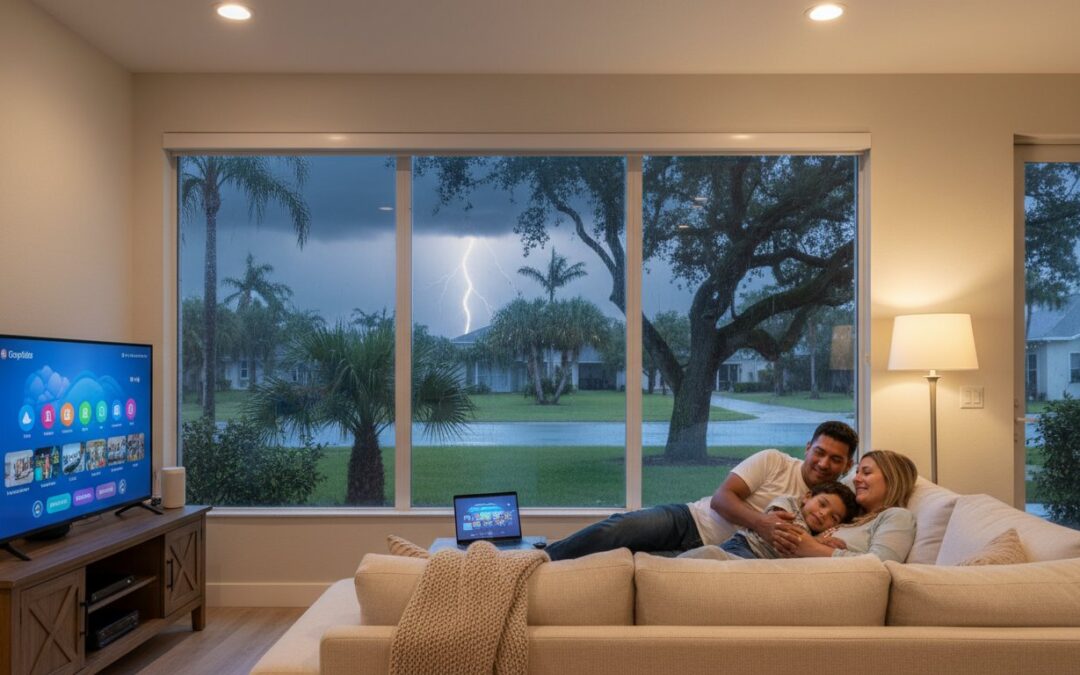
In 2023, Florida recorded over 19 million lightning events, cementing our state’s reputation as the lightning capital of the country. For families in our community, this often means watching the lights flicker during a July afternoon downpour and wondering if your refrigerator or 4K television will survive the next strike. Investing in whole home surge protection sanford fl is no longer a luxury; it’s a necessary safeguard for the modern household. At Sanford Electric, LLC, we’ve protected local properties since 1925. We know that a standard power strip isn’t enough to stop a massive voltage spike from damaging your home’s infrastructure.
You likely understand the frustration of resetting clocks and the anxiety of hearing a nearby crack of thunder. We’re here to show you how professional grade protection at the electrical panel can extend the life of your appliances by up to 30% and potentially lower your homeowner’s insurance premiums. This guide explains the critical differences between point-of-use devices and panel-mounted systems, ensuring you have the facts to protect your Central Florida legacy. We’ll walk through the installation process and the long-term peace of mind that comes with a secure, family-owned approach to electrical safety.
Key Takeaways
- Learn why Central Florida’s “Lightning Alley” designation demands a more robust electrical defense than standard power strips can provide.
- Understand the “layered protection” strategy and how Type 2 devices at your main panel serve as the primary shield for your entire property.
- Discover why professional whole home surge protection sanford fl offers a higher return on investment by safeguarding expensive appliances that retail strips cannot reach.
- Find out how to evaluate your home’s specific wiring and kiloamp requirements to ensure your protection system aligns with Sanford’s unique storm intensity.
- See how a century of local expertise and four generations of family service provide the peace of mind your Central Florida legacy deserves.
The Sanford Surge Threat: Why Central Florida Homes are at Risk
Sanford Electric Co. II, Inc. has provided reliable electrical solutions to Central Florida since 1925. Over the last 99 years, we have seen the local power grid evolve from simple lighting circuits to the complex, high-demand systems found in modern homes. Today, the most effective way to secure a residence is through whole home surge protection sanford fl. This technology acts as a primary gatekeeper, installed directly at your main electrical panel to intercept high-voltage spikes before they enter your interior wiring. While many homeowners rely on cheap power strips, these only offer localized protection. A professional whole-home system creates a comprehensive shield for every outlet, light fixture, and hardwired appliance in your house.
The danger to Sanford homes comes from two distinct directions. External surges originate from outside the property, often caused by lightning strikes or utility grid malfunctions. Internal surges are much more frequent. These occur when high-power devices like your air conditioner or refrigerator cycle on and off, sending small but consistent ripples of excess voltage through your home. Since 1925, our family-owned business has emphasized that while one large surge can cause an immediate fire, thousands of small internal surges eventually destroy sensitive circuit boards. This is why professional intervention at the panel level is a necessity rather than an upgrade.
Sanford Weather and Your Electrical Grid
Sanford sits in the heart of what meteorologists call “Lightning Alley.” According to the 2023 Vaisala Annual Lightning Report, Florida recorded 113 lightning pulses per square kilometer, maintaining its status as the lightning capital of the United States. Seminole County experiences a high density of these strikes, particularly during the humid summer months between June and September. These afternoon storms do more than just rattle windows; they create massive electromagnetic fields that can induce voltage spikes in nearby power lines.
Local residents also deal with the complexities of the regional power grid managed by Duke Energy and Florida Power & Light. Utility switching, which happens when the power company reroutes electricity to balance the load during peak hours, sends surges into residential lines. These fluctuations are common in Sanford during the 3 PM to 7 PM window when residential AC demand peaks. Over time, these daily events cause cumulative damage to your home’s copper wiring and insulation, leading to premature failure of your electrical system.
The Hidden Cost of Unprotected Electronics
Modern Sanford homes are filled with “smart” technology that is far more delicate than the appliances of previous decades. A typical kitchen in a 2,500 square foot Sanford home contains roughly $15,000 worth of electronics, including smart refrigerators, induction cooktops, and high-efficiency dishwashers. These devices rely on microprocessors that can be fried by a surge as small as 10 volts above the standard operating range. When these components face constant stress, they develop what technicians call “electronic rust.” This is the slow, invisible degradation of internal circuitry that eventually leads to a device simply failing to turn on without any obvious cause.
To prevent this, our technicians install specialized hardware that monitors the incoming flow of electricity. You can learn more about the technical specifics of how surge protectors work to understand the physics of voltage regulation. Essentially, a high-quality surge protector shunts excess voltage safely to the ground before it can reach your expensive electronics. By investing in whole home surge protection sanford fl, you ensure that your property remains stable and your investments stay protected. Our team at Sanford Electric Co. II, Inc. brings a century of experience to every installation, ensuring your home meets the highest safety standards in Central Florida.
How Whole Home Surge Protection Works: A Defense-in-Depth Strategy
Effective electrical safety is never about a single device. It’s a comprehensive strategy designed to catch and divert excess energy before it ruins your property. Since 1925, our team has seen how Central Florida storms can devastate residential wiring. A modern whole home surge protection sanford fl system operates on a “Defense-in-Depth” principle. This approach uses multiple layers to ensure that if one barrier is bypassed, the next one stands ready. It functions much like a pressure relief valve in a plumbing system. When voltage exceeds the standard 120-volt threshold, the protector detects the anomaly and redirects the lethal energy safely into the ground.
The core of this strategy is the response time. High-quality protectors react in less than one nanosecond. This speed is critical because electronic components in modern smart homes can be destroyed by a spike lasting only a few microseconds. According to the NIST guide to surge protection, transient voltages are a constant threat to sensitive equipment. While lightning is the most famous culprit, about 80% of surges are actually generated internally by large appliances, such as your air conditioner or refrigerator, cycling on and off. A professional installation ensures these internal “micro-surges” don’t slowly degrade your expensive electronics over time.
A solid grounding system is the silent partner in this process. In many of Sanford’s historic neighborhoods, homes built between 1940 and 1960 may have degraded ground rods or outdated bonding. Without a low-resistance path to the earth (typically 25 ohms or less), a surge protector has nowhere to send the diverted energy. Our technicians prioritize verifying your home’s grounding integrity before installing any new equipment. This ensures the whole home surge protection sanford fl unit can actually perform its job when a 3,000-volt spike hits your service line.
Type 1 vs. Type 2 Protectors
Type 1 devices are mounted on the “line side” of your main disconnect. These are often meter-based units that handle massive external surges from the utility grid. Type 2 devices are installed at the main service panel on the “load side.” For most Sanford homeowners, the Type 2 protector is the primary focus. It provides a robust shield for every single circuit in the house. We typically recommend Type 2 installations because they offer the most flexible and comprehensive coverage for residential panel boards, protecting everything from your LED lighting to your kitchen appliances.
The Role of Point-of-Use (Type 3) Devices
Type 3 devices are the common power strips found in most Lake Mary and Orlando home offices. It’s a mistake to rely on these as your only line of defense. They are designed as the “last mile” of protection. Their job is to catch any tiny remnants of voltage that the main panel unit might have missed. A whole-home unit acts as the primary gatekeeper, absorbing the heavy lifting so your Type 3 strips don’t melt or catch fire during a significant event. This tiered approach is the only way to truly secure high-value technology like home theaters and custom PC builds. If you want to ensure your layers are correctly configured, you can consult with our master electricians for a full system evaluation.
Whole Home Systems vs. Power Strips: Comparing the ROI
Many Sanford homeowners ask why they should invest in a professional system when a $20 power strip from a big-box store seems to do the job. The reality is that retail power strips and professional whole home surge protection systems operate on entirely different levels of capacity and coverage. Since 1925, our team has observed how Florida’s 1.2 million annual lightning strikes can easily bypass simple strips.
Retail strips typically offer a joule rating between 400 and 2,000. This is a measure of how much energy the device can absorb before it fails. In contrast, the industrial-grade panel units we install at Sanford Electric Co. II, Inc. are designed to divert up to 80,000 amps of surge current away from your home. A power strip is a last line of defense; it isn’t designed to handle the primary surge entering through your utility lines.
Coverage Gaps in Standard Power Strips
Standard strips leave your most expensive assets completely vulnerable. Your HVAC system, electric water heater, and kitchen range are direct-wired into your home’s electrical system. These items represent a combined investment of $15,000 to $20,000 in most Central Florida households. Power strips cannot reach these appliances. Surges also frequently enter through cable or phone lines, traveling backward into your main electrical panel.
Cheap surge strips often create a false sense of security. The Metal Oxide Varistors (MOVs) inside these strips degrade every time they take a small hit. After 3 or 5 years, most retail strips lose their protective capabilities entirely. Because they don’t always have “end of life” indicators, you might be plugging your $1,200 laptop into a glorified extension cord without knowing it.
Long-term Financial Benefits
Opting for whole home surge protection sanford fl provides a measurable return on investment through appliance longevity. Consistent voltage regulation can extend the lifespan of smart appliances by 25% to 30%. Modern refrigerators and washing machines rely on sensitive circuit boards that are notoriously expensive to repair. A single control board replacement often costs $500 or more; a professional surge unit protects every board in the house simultaneously.
Our technicians specialize in whole home surge protection sanford fl to ensure your entire property is shielded. We prioritize brands like Eaton and Square D because they back their hardware with significant equipment protection warranties. These policies often cover $25,000 to $75,000 in connected equipment damage if the protector fails. This layer of financial security is unavailable with generic store-bought strips.
Your homeowners insurance policy might also reward this safety measure. Some Florida providers offer premium discounts of 5% to 10% for homes with documented, professionally installed surge protection. When you compare the one-time installation cost to a standard $1,000 insurance deductible, the system pays for itself the moment a single storm rolls through Sanford. Our family-owned business has focused on these practical, high-value solutions for nearly a century. We believe in providing the stability your home deserves.
Sanford Installation Guide: Panels, Wiring, and Local Codes
Sanford’s electrical infrastructure is as diverse as its history. When we evaluate a property for whole home surge protection sanford fl, we look at the specific era of the home first. A 1920s bungalow near the historic downtown district presents different challenges than a 1975 ranch-style home in the Hidden Lake area. Your electrical panel serves as the foundation for this protection. We must verify that the bus bars are capable of accepting a dedicated two-pole breaker, which is the standard connection point for a Type 2 surge protective device (SPD).
Central Florida is the lightning capital of the United States. This geographical reality dictates the technical specifications of the hardware we install. While a 10kA or 20kA (kiloamp) rating might suffice in less volatile climates, Sanford homes require more robust equipment. We typically recommend devices with a surge current capacity of 60kA to 108kA per phase. This ensures the unit survives multiple high-intensity discharges without failing. Our technicians also prioritize the integrity of your grounding electrode system. A surge protector is only a bridge; it requires a low-resistance path to the earth to dump excess voltage. If your ground rod is corroded or your bonding jumper is loose, the surge has nowhere to go but into your expensive appliances.
Compatibility with Older Sanford Homes
Many local residences still operate with legacy systems like Federal Pacific Electric (FPE) or Zinsco panels. These brands are notorious for failing to trip during overcurrent events. Since 1925, Sanford Electric Co. II has documented the risks associated with these panels. We do not mount modern surge devices to compromised or recalled equipment. We also pay close attention to 1970s homes with aluminum wiring. These connections require specific antioxidant inhibitors and CO/ALR rated components to prevent overheating. A thorough panel inspection is our first step to ensure your legacy system can safely host modern protection hardware.
What to Expect During Installation
A professional installation is a streamlined process that typically lasts between 60 and 120 minutes. We focus on the “short-lead” wiring method. This means we position the surge device as close to the main lugs as possible. By keeping the connecting wires under six inches, we reduce impedance and allow the device to react in less than a nanosecond. Attempting to install a panel-mounted surge protector yourself poses a severe risk of lethal arc flash and immediately voids both the manufacturer’s warranty and your homeowner’s insurance protections. Our family-owned team handles the dangerous work so you don’t have to.
- Verification of the existing grounding rod resistance (aiming for 25 ohms or less).
- Installation of a dedicated 20-amp or 30-amp double-pole breaker.
- Torquing all connections to manufacturer specifications to prevent arcing.
- Final system testing to confirm the diagnostic LEDs indicate an “active” protection status.
Safe, reliable electrical work requires a deep understanding of local building codes and historical home quirks. We bring nearly a century of experience to every job site. You can secure your property today by choosing to schedule a professional surge protection assessment with our master electricians.
The Sanford Electric Standard: Quality Service Since 1925
Sanford Electric Co. II, Inc. opened its doors in 1925. At that time, electrical systems were simple and robust, designed primarily for basic lighting and early appliances. Today, the average household in Central Florida relies on a delicate ecosystem of smart appliances, home offices, and high-definition entertainment systems. These devices are far more sensitive to voltage fluctuations than the equipment of the 1920s. Installing whole home surge protection sanford fl is the most effective way to safeguard these modern investments. Our company has evolved alongside the Florida power grid for four generations. We understand how local infrastructure reacts to the intense weather patterns of the region, and we apply that knowledge to every installation.
Why 100 Years of Experience Matters
Longevity provides a perspective that newer companies simply don’t have. Since 1925, we’ve seen the transition from knob-and-tube wiring to the sophisticated digital panels used today. This deep institutional knowledge ensures that we don’t just install a device; we integrate it correctly into your specific electrical environment. Being a four-generation family business means our reputation is tied to every job we complete in Seminole and Orange Counties. We aren’t a faceless franchise. We’re your neighbors who happen to be experts in complex electrical safety and infrastructure. Our history is a testament to the stability we provide to our clients.
Our service model relies on total transparency and professional accountability. We know that inviting a technician into your home requires a high level of trust. That’s why every member of our team is fully licensed, insured, and background-checked. We follow strict safety protocols that have been refined over decades of service. This disciplined approach eliminates the guesswork and provides you with the peace of mind that comes from hiring a long-standing institution. We focus on getting the job done right the first time, maintaining the high standards that have defined our “Quality Service Since 1925” tagline for nearly a century.
Protecting Your Central Florida Investment
Central Florida is often cited as the lightning capital of the United States. Some areas in our region experience over 50 lightning strikes per square mile annually. A “Defense-in-Depth” strategy is essential for any property owner who wants to avoid costly equipment failures. This approach uses a primary surge arrester at the main service entrance to block external spikes, while secondary protection handles internal surges from large appliances like air conditioners. Our expertise extends across both residential and commercial sectors, allowing us to build a whole home surge protection sanford fl system that meets your specific power demands and protects your 2024 technology with 1925 reliability.
Don’t leave your property’s safety to chance during the next storm season. A single surge can cause thousands of dollars in hidden damage to your wiring and electronics. Our technicians are ready to perform a comprehensive safety inspection and provide a detailed quote for a custom protection plan. We’ve spent the last 99 years building a legacy of excellence in this community. Let us help you secure your home with the same level of care we’ve provided since our founding. Schedule your surge protection consultation with Sanford Electric today and ensure your home is ready for whatever the Florida weather brings.
Secure Your Central Florida Legacy Today
Protecting your property in Central Florida requires more than just standard power strips. Florida leads the nation with over 285,000 lightning insurance claims filed since 2017, making professional defense a necessity rather than an option. A comprehensive system guards every appliance and sensitive circuit directly from the service panel, offering a far superior ROI compared to retail plug-ins that only cover individual devices. Investing in whole home surge protection sanford fl ensures your electrical system remains stable and safe for years to come.
Sanford Electric Co. II, Inc. has addressed these specific regional hazards for four generations. We’ve maintained a standard of excellence since 1925, providing the reliable expertise your family deserves. Our technicians understand the local codes and wiring challenges unique to our community. We take pride in being a family-owned and operated business that puts your safety first. Our team is ready to help you safeguard your home and your legacy today. Secure Your Home with Sanford’s Trusted Electricians Since 1925. We look forward to providing you with the peace of mind that comes from a century of quality service.
Frequently Asked Questions
Do whole house surge protectors really work against direct lightning strikes?
Whole home surge protectors are designed to manage surges up to 40,000 or 80,000 amps, but they cannot stop a direct lightning strike. A direct hit carries over 100 million volts of electricity, which is enough to jump across circuits and bypass any residential device. We recommend combining surge protection with a dedicated lightning rod system for complete safety. This dual approach provides the highest level of defense for your Central Florida property.
How much does it cost to install whole home surge protection in Sanford, FL?
The average cost for professional whole home surge protection sanford fl ranges between $300 and $750 including parts and labor. Prices vary based on your electrical panel’s age and the specific surge device’s joule rating. Sanford Electric Co. II, Inc. provides transparent estimates for every installation. Investing this amount protects over $10,000 in household electronics and appliances from unpredictable power spikes. It’s a reliable way to ensure your home stays safe.
How long do whole home surge protectors last before they need replacement?
Most whole home surge protectors last between 3 and 5 years under normal conditions. These devices use Metal Oxide Varistors that degrade every time they divert a surge. If your home experiences a major electrical event, the device might require replacement immediately. Our technicians check these components during routine safety inspections to ensure your system remains fully operational. Regular maintenance prevents your expensive electronics from being exposed to the next grid fluctuation.
Will a surge protector lower my homeowners insurance in Florida?
Many Florida insurance providers offer a 5% to 10% premium discount for homes equipped with professionally installed surge protection. Companies like State Farm or Liberty Mutual often provide credits because these devices reduce the risk of fire and electronic damage claims. You should contact your specific agent to see if your policy qualifies for these safety incentives. It’s a practical way to lower long-term costs while securing your Central Florida property.
Can I install a whole house surge protector myself?
You shouldn’t attempt to install a whole house surge protector yourself because it requires working inside the main service panel near live 240-volt bus bars. One mistake can lead to severe electrical shock or a house fire. Since 1925, our family-owned business has emphasized that all panel work must be performed by a licensed electrician. Professional installation ensures the device is properly grounded and meets the National Electrical Code requirements for your safety.
What is the difference between a surge arrester and a surge protector?
A surge arrester is installed on the utility side of the meter to handle high-voltage external spikes, while a surge protector is installed at the circuit breaker panel for internal protection. Arresters manage surges exceeding 1,000 volts from the grid. Protectors handle the smaller, frequent spikes that occur inside the home. Using both provides a comprehensive shield for your whole home surge protection sanford fl strategy. This layered approach is the industry standard.
Does whole home surge protection cover my HVAC system?
Whole home surge protection covers the sensitive electronic control boards in your HVAC system, but we suggest adding a secondary protector at the outdoor condenser unit. A standard HVAC replacement costs between $5,000 and $12,000, making this extra layer of defense a wise investment. Central Florida’s frequent afternoon storms create constant voltage fluctuations. Protecting the compressor directly prevents premature motor failure and saves you from expensive emergency repairs that occur without warning.
How do I know if my surge protector has been “spent” or tripped?
You can determine if your surge protector is spent by checking the diagnostic LED lights located on the face of the device. A green light typically indicates the unit is active, while a red light or no light means the internal components have been consumed. We recommend checking these indicators once every 30 days. If the light is out, your home is no longer protected from the next power surge or grid failure.