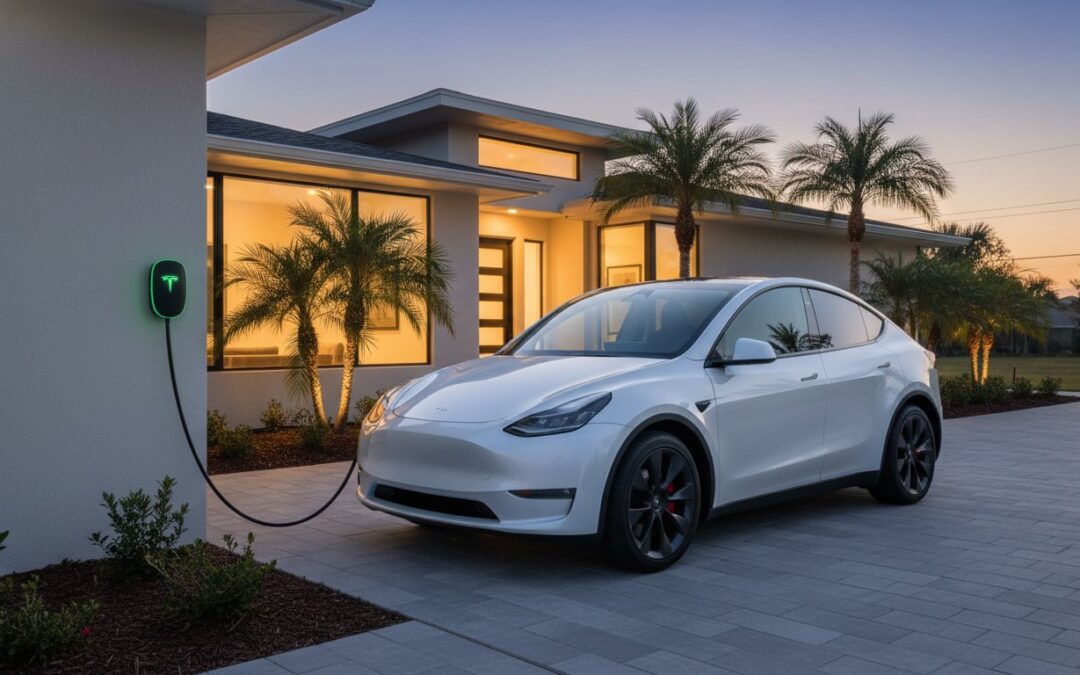
Last Tuesday, a homeowner in Sanford’s residential district discovered their 1950s electrical panel wasn’t equipped to handle the high-demand load of a new electric vehicle. It’s a common hurdle for Central Florida residents who want the convenience of home charging but worry about legacy wiring or potential fire hazards. Securing a professional tesla charger installation sanford is more than just mounting a device on the wall; it’s about ensuring your home’s infrastructure can safely manage a continuous 48-amp draw without compromise.
You likely already know that waking up to a full battery is the premier benefit of owning a Tesla, yet the technical choice between a Wall Connector and a NEMA 14-50 outlet often causes unnecessary confusion. We’ll help you master these technical requirements and navigate specific Seminole County building codes to ensure your system is both legal and efficient. This guide covers everything from load calculations to final inspections, providing the same peace of mind Sanford Electric, LLC has delivered to local families since 1925. You’ll learn exactly how to achieve the fastest possible charging speeds while keeping your family safe and your property up to code.
Key Takeaways
- Learn why transitioning to a Level 2 home charging system is essential for maintaining your Tesla’s battery health and maximizing daily convenience in Central Florida.
- Evaluate the technical differences between a hardwired Wall Connector and a NEMA 14-50 outlet to choose the setup that best fits your home’s infrastructure.
- Determine if your electrical panel has the necessary capacity for a safe tesla charger installation sanford, especially when upgrading historic homes with legacy service.
- Navigate the local permitting and inspection process with confidence to ensure your installation meets all City of Sanford and Seminole County safety standards.
- Gain peace of mind by partnering with a trusted local expert and family-owned business that has served the electrical needs of our community since 1925.
Why Home Tesla Charger Installation is Essential in Sanford
Central Florida is witnessing a steady shift toward sustainable transport. Tesla ownership in our community has grown by more than 30% annually as families seek to reduce their carbon footprint and fuel costs. Since 1925, Sanford Electric Co. II, Inc. has helped residents adapt to new technologies, and a professional tesla charger installation sanford is the current standard for modern home ownership. Relying on public infrastructure is often a compromise that modern commuters don’t need to make.
The 120V mobile connector that comes with many vehicles is insufficient for the daily needs of a Sanford driver. It provides roughly 3 miles of range per hour. If you commute 40 miles a day, your car requires over 13 hours to recover that energy. By 2026, Supercharger rates are projected to reach $0.50 per kWh during peak hours. In contrast, residential rates in Seminole County remain significantly lower, often around $0.13 per kWh. Installing a dedicated home station allows you to utilize the North American Charging Standard (NACS) hardware for maximum reliability and safety.
Level 1 vs. Level 2 Charging Speeds
Standard wall outlets deliver energy at a slow trickle, which isn’t practical for a primary vehicle. A Level 2 Wall Connector provides up to 44 miles of range per hour. This speed is vital during Central Florida summers. High temperatures force your Tesla to use energy for battery cooling while it charges; a faster charge window reduces the time your electrical system remains under heavy load in a hot garage. A Level 2 upgrade is the baseline requirement for any Sanford driver who values their time and battery health.
Impact on Property Value in Central Florida
EV-ready homes in the Sanford and Lake Mary markets are outperforming traditional listings. Recent real estate data suggests that homes with professional EV infrastructure can sell for a 1.5% premium. This tesla charger installation sanford provides a high return on investment by future-proofing the property for multi-EV households. Our family-owned business ensures your infrastructure is safe and compliant with all local codes, adding tangible value and peace of mind to your residential property.
Wall Connector vs. NEMA 14-50: Choosing Your Setup
Selecting the right equipment is the first step in a successful tesla charger installation sanford, ensuring your vehicle is ready for the road every morning. Since 1925, Sanford Electric Co. II, Inc. has guided local homeowners through every major electrical shift. The choice usually comes down to the Tesla Wall Connector or a NEMA 14-50 outlet. The Wall Connector is a hardwired station that delivers up to 48 amps of power. This translates to roughly 44 miles of range added per hour. Conversely, the NEMA 14-50 is a high-voltage outlet that utilizes the Tesla Mobile Connector. This setup is limited to 32 amps, providing about 30 miles of range per hour.
Sanford’s climate requires specific considerations for any electrical project. Central Florida humidity and heat can stress components during the 6 to 10 hours a vehicle might spend charging. The Wall Connector is NEMA 3R rated for indoor or outdoor use, making it a dependable choice for carports. While a NEMA 14-50 outlet is versatile, it requires an industrial-grade receptacle to handle the continuous thermal load. We’ve seen consumer-grade outlets fail under the 80% continuous load rule required by the National Electrical Code.
Hardware Cost and Performance Comparison
As of 2026, the Tesla Wall Connector hardware typically retails for $475. While the hardware cost is higher than a standard outlet, the performance gains are measurable. Hardwiring the unit directly into your panel reduces the number of connection points, which increases safety and reliability. The U.S. Department of Energy provides detailed resources on home charging for electric vehicles that highlight how Level 2 systems like these are the most efficient way to fuel an EV. Our technicians ensure the 60-amp circuit required for maximum output is installed with the precision our family-owned business is known for.
Smart Features and Connectivity
The Wall Connector offers integrated Wi-Fi for over-the-air firmware updates and remote troubleshooting. Through the Tesla app, you can monitor energy consumption and schedule charging for off-peak hours when utility rates may be lower. For Sanford households with two Teslas, the Wall Connector supports “Power Sharing.” This technology allows up to six units to share power from a single circuit. It’s a sophisticated way to manage your home’s electrical demand without expensive service upgrades. If you’re ready to modernize your garage, our team can perform a comprehensive load calculation to determine the best fit for your property.
Is Your Sanford Home Ready? Panel Capacity and Safety
Sanford’s historic charm often hides electrical systems that predate modern power demands. Many homes in neighborhoods like the Sanford Residential Historic District or the areas surrounding Lake Monroe still rely on 100-amp electrical panels. A standard Tesla Wall Connector requires a 60-amp circuit to deliver maximum charging speeds. This single addition consumes 60% of a 100-amp panel’s total capacity, leaving very little room for your air conditioner, water heater, or kitchen appliances. Before beginning a tesla charger installation sanford project, we must determine if your infrastructure can handle this continuous load.
Safety remains our primary focus at Sanford Electric Co. II, Inc. The U.S. Environmental Protection Agency provides clear guidance on safety and electrical requirements for home charging, emphasizing the need for professional load calculations. We also strongly recommend Whole Home Surge Protection as part of the install. A Tesla battery represents a $15,000 investment. Central Florida leads the nation in lightning strikes, which can send 1,000-volt spikes through your home’s wiring. A dedicated surge protector at the panel provides the stability your vehicle requires.
The 100-Amp vs. 200-Amp Debate
Calculating your home’s total load is a precise science that we’ve practiced since 1925. A typical Central Florida home with a 4-ton AC unit, a 1.5-horsepower pool pump, and an electric range already draws significant current. Upgrading to 200-amp service has become the modern standard for local homeowners. An undersized panel generates excessive heat, often reaching temperatures above 150 degrees Fahrenheit at the bus bar. This heat leads to brittle insulation, melted breaker casings, and eventual fire hazards. We ensure your panel has the headroom to operate coolly under the 48-amp continuous draw of an EV charger. Understanding the complete electrical requirements for EV charger Florida installations helps homeowners make informed decisions about necessary upgrades.
Legacy Wiring and Aluminum Remediation
Homes built in Seminole County between 1965 and 1973 often contain aluminum branch circuit wiring. Aluminum expands and contracts at different rates than the copper terminals found in modern EV equipment. This thermal movement creates loose connections and dangerous arcing. Our technicians carefully evaluate your existing infrastructure for these legacy issues. A tesla charger installation sanford requires proper grounding and bonding to prevent the vehicle’s chassis from becoming electrified. We bring nearly a century of family-owned experience to every job, ensuring your historic property is equipped for the future without compromising its safety.
The Professional Installation Process in Sanford
Since 1925, Sanford Electric Co. II, Inc. has prioritized safety and precision in every project. A professional tesla charger installation sanford follows a strict, five-step protocol to ensure your home’s electrical system handles the 48-amp continuous load of a Tesla Wall Connector without strain. We’ve refined this process over decades to protect your property and your vehicle.
- Step 1: Site Assessment and Load Calculation. We begin by evaluating your existing 200-amp or 150-amp electrical panel. Our licensed electricians perform a formal load calculation to verify that adding a 60-amp circuit won’t exceed your home’s total capacity.
- Step 2: Permitting. We handle all paperwork with the City of Sanford or Seminole County. This ensures your installation is documented and legal.
- Step 3: Hardware Mounting and Wiring. We install the Wall Connector and run the dedicated circuit. Depending on your garage layout, we use surface-mounted EMT conduit or fish the wiring behind finished walls for a cleaner look.
- Step 4: Testing and Inspection. We verify the 240V output and commission the unit through the Tesla Pros app. Afterward, we coordinate the final inspection with the local municipality to sign off on the work.
- Step 5: Customer Orientation. Our technician shows you how to connect the charger to your home Wi-Fi and provides tips on scheduling charging during off-peak hours to save on utility costs.
Navigating Sanford and Seminole County Permits
Florida homeowners insurance policies often contain clauses that allow providers to deny claims if an electrical fire is traced back to unpermitted work. Securing a permit for your tesla charger installation sanford is a non-negotiable step for protecting your investment. With the 2026 timeline for updated local electrical inspections fast approaching, having a documented permit today prevents future compliance headaches. Our family-owned team manages the entire application process, ensuring your project meets all Seminole County requirements from the start. Proper compliance with Florida electrical requirements for EV charger installations protects both your investment and your family’s safety.
Safety Standards and Code Compliance
We strictly adhere to NEC Article 625, which governs the installation of electric vehicle supply equipment. This includes installing the correct two-pole circuit breaker and ensuring the unit has a dedicated ground path. While Tesla hardware has built-in GFCI protection, we ensure the entire circuit meets current Florida building codes to prevent nuisance tripping. Applying the precise manufacturer-specified torque to every wire terminal ensures a secure connection that prevents the thermal expansion risks common in high-amperage charging.
Protect your home and your new EV with a system installed by local experts. Schedule your professional charger assessment today with our team.
Why Sanford Electric Co II is Your Trusted EV Partner
Sanford Electric Co. II, Inc. has anchored the Central Florida community since 1925. For 99 years, our family-owned business has provided the stability and technical skill required for complex electrical projects. Choosing a partner for your tesla charger installation sanford means trusting a team that understands local infrastructure from the ground up. We bring four generations of experience to every garage and driveway. This deep history allows us to bridge the gap between Sanford’s charming historic architecture and the high-demand power requirements of modern electric vehicle technology.
We don’t rely on hype or aggressive sales tactics. Instead, we lean on a century of proven results. Our technicians manage the delicate balance of preserving the integrity of older structures while integrating 60-amp circuits for fast charging. We prioritize safety and quality over speed; a philosophy that has sustained our reputation since the early 20th century. When we enter a home, we treat it with the respect a neighbor deserves.
100 Years of Reliability
Our century of experience ensures we’ve seen every possible electrical scenario in Sanford. From homes built in the 1920s to new construction in master-planned communities, we know how to adapt. Every technician we send to your property is licensed, insured, and has passed a rigorous background check. This provides the peace of mind you need when modifying your home’s power system. If your current system lacks the capacity for a high-speed charger, we provide clear solutions. See our Electrical Panel Upgrades for EV readiness to ensure your home remains safe and efficient.
Get Your Sanford Tesla Installation Quote
We provide transparent pricing and detailed project walkthroughs for every tesla charger installation sanford. Our team identifies the most efficient circuit path and ensures all work meets the latest National Electrical Code standards. Because we’re a local fixture, we offer long-term support for maintenance and future upgrades. We’ve been here since 1925, and we’ll be here for your next vehicle too. Schedule your Tesla charger installation assessment today!
Power Your Electric Future with Confidence
Transitioning to an electric vehicle is a significant step toward efficiency; however, your home’s electrical infrastructure must be ready to support this change safely. Choosing between a high-speed Wall Connector or a versatile NEMA 14-50 outlet depends on your daily mileage and existing panel capacity. Many Sanford homes feature legacy electrical systems that require a Master Electrician’s eye to ensure they meet modern safety standards. Proper planning prevents overloaded circuits and ensures your investment remains protected for years to come.
Sanford Electric Co. II has served Central Florida since 1925. As a family-owned and operated business, we prioritize the stability of your home’s power. Our licensed and insured Master Electricians specialize in integrating new technology into established local properties. When you schedule your tesla charger installation sanford project with us, you’re relying on 99 years of technical expertise. We handle the permits, the wiring, and the final safety checks so you can enjoy the convenience of a full charge every morning.
Secure Your Professional Tesla Installation from Sanford’s Trusted Electricians Since 1925
We’re ready to help you make the switch to a cleaner, more efficient way to drive through Central Florida.
Frequently Asked Questions
Do I need to upgrade my electrical panel for a Tesla charger in Sanford?
You’ll likely need an upgrade if your current electrical panel provides less than 200 amps of service. While many Sanford homes built after 1990 have sufficient capacity, older residences often require a panel modernization to safely handle the 48-amp continuous draw of a Level 2 charger. Our team has evaluated local infrastructure since 1925, ensuring every installation meets National Electrical Code standards for safety and long-term reliability.
How much does it cost to install a Tesla Wall Connector in Central Florida?
A standard tesla charger installation sanford typically costs between $500 and $1,500 for labor and materials, excluding the price of the Wall Connector unit. This investment covers the 60-amp circuit breaker, industrial-grade wiring, and professional mounting. Costs fluctuate based on the distance between your electrical panel and the charging location. We provide clear, fixed-price estimates to ensure you face no hidden fees during the process.
Can I install a Tesla charger myself or use a general handyman?
You should always hire a licensed electrical contractor rather than a general handyman to ensure your home remains compliant with Florida Statute 489.503. Handymen lack the specialized training to perform load calculations or manage high-voltage circuits safely. Sanford Electric Co. II, Inc. brings a century of technical expertise to every job. We protect your vehicle warranty and your home’s safety by performing every installation to exact manufacturer specifications.
Is a permit required for EV charger installation in Seminole County?
Yes, the Seminole County Building Division requires a formal electrical permit for all EV charger installations. This process involves a professional plan review and a final inspection to verify that the work meets the 2023 Florida Building Code. Most residential permits in our area cost between $100 and $200. We handle all the paperwork and scheduling for you, maintaining the high standards we’ve set in Central Florida since our founding in 1925.
How long does the installation process take from start to finish?
A typical professional installation takes between 2 and 4 hours to complete once our technicians arrive at your home. This timeframe includes mounting the hardware, running the conduit, and testing the circuit for proper voltage. We value your time and maintain a disciplined schedule to ensure your Tesla is ready to charge by the evening. Our family-owned business prides itself on efficient service that doesn’t compromise on technical precision or safety.
What is the difference between a NEMA 14-50 outlet and a Tesla Wall Connector?
The Tesla Wall Connector provides up to 44 miles of range per hour at a 48-amp output, while a NEMA 14-50 outlet maxes out at roughly 30 miles per hour. A Wall Connector offers a hardwired, weather-resistant connection that’s more reliable for daily use. We often recommend the Wall Connector for its superior safety features and faster charging speeds. Choosing the right option depends on your daily driving habits and your home’s existing electrical load.
Will an outdoor Tesla charger installation survive Florida’s heat and storms?
Tesla Wall Connectors feature a NEMA 3R rating, which means they’re designed to withstand Florida’s heavy tropical downpours and 100-degree summer heat. Our technicians use UV-resistant conduit and high-grade sealants to prevent moisture intrusion during afternoon thunderstorms. Since 1925, we’ve installed electrical systems that endure Central Florida’s unique climate. You can trust that your outdoor tesla charger installation sanford is built for long-term durability and safety in all weather conditions.
How do I know if my home has enough amperage for a Level 2 charger?
Our licensed electricians perform a formal load calculation to determine if your home’s 100-amp or 200-amp service can support a new 60-amp circuit. We follow the 80% rule, which dictates that a continuous load shouldn’t exceed 80% of the circuit’s capacity. If your current appliances already consume most of your available power, we’ll discuss safe upgrade options. This technical assessment prevents tripped breakers and ensures your home’s electrical system remains stable and secure.