

What if that “urgent” system replacement is actually a simple, localized repair? It is natural to feel a sense of anxiety when a technician uses complex technical jargon to describe a potential fire hazard in your home. You want your family to be safe, but you also don’t want to pay for extensive work that isn’t strictly necessary. Deciding when to get a second opinion on electrical work is one of the smartest moves a Central Florida homeowner can make to ensure they are receiving an honest, accurate diagnosis.
At Sanford Electric, LLC, we have provided quality service since 1925. We believe that true safety comes from transparency and technical proficiency, not high-pressure sales tactics. In this 2026 guide, you’ll learn how to spot red flags in quotes and verify technical necessity against the current Florida Building Code. We will help you distinguish between elective system enhancements and immediate code requirements, such as the upcoming September 1, 2026, GFCI deadline for HVAC equipment. This overview provides the peace of mind you need to keep your home safe and compliant without the stress of hidden agendas.
Key Takeaways
- Recognize the “full replacement” default as a significant red flag when a technician refuses to discuss repair options for your existing electrical system.
- Learn when to get a second opinion on electrical work to verify that technical claims about your panel or wiring align with current safety standards.
- Understand how to compare estimates by looking for specific line items and material quality rather than focusing solely on the lowest price.
- Identify the unique safety risks associated with Federal Pacific and Zinsco panels common in many Central Florida subdivisions.
- Gain clarity on aluminum wiring remediation to determine if your home requires a full upgrade or targeted, code-compliant safety repairs.
Why Getting a Second Opinion on Electrical Work is a Critical Safety Step
A second opinion in the electrical trade isn’t a lack of trust; it’s an independent technical verification of a proposed scope of work. When a technician recommends a major investment, they are making a clinical diagnosis of your home’s infrastructure. Choosing to get a second opinion on electrical work ensures that this diagnosis is based on technical necessity rather than a sales quota. Misdiagnosis often happens for two reasons: a lack of field experience or aggressive revenue targets set by corporate-owned service companies. A technician who has only been in the field for a few years might see a symptom, like a flickering light, and assume the entire panel is failing. They might miss the localized loose connection or the specific circuit overload that a seasoned expert would identify immediately.
Safety is the primary driver behind this process. Fixing a symptom while ignoring the root cause creates a false sense of security. If a contractor replaces a breaker but fails to address the underlying insulation damage in your walls, the fire hazard remains. At Sanford Electric Co. II, Inc., we lean on the “1925 Standard.” Our century of history in Central Florida means we have seen every evolution of residential wiring. We don’t guess; we verify. This long-standing perspective allows us to provide a calm, authoritative assessment that prioritizes your family’s stability over a quick sale.
The Difference Between ‘Broken’ and ‘Outdated’
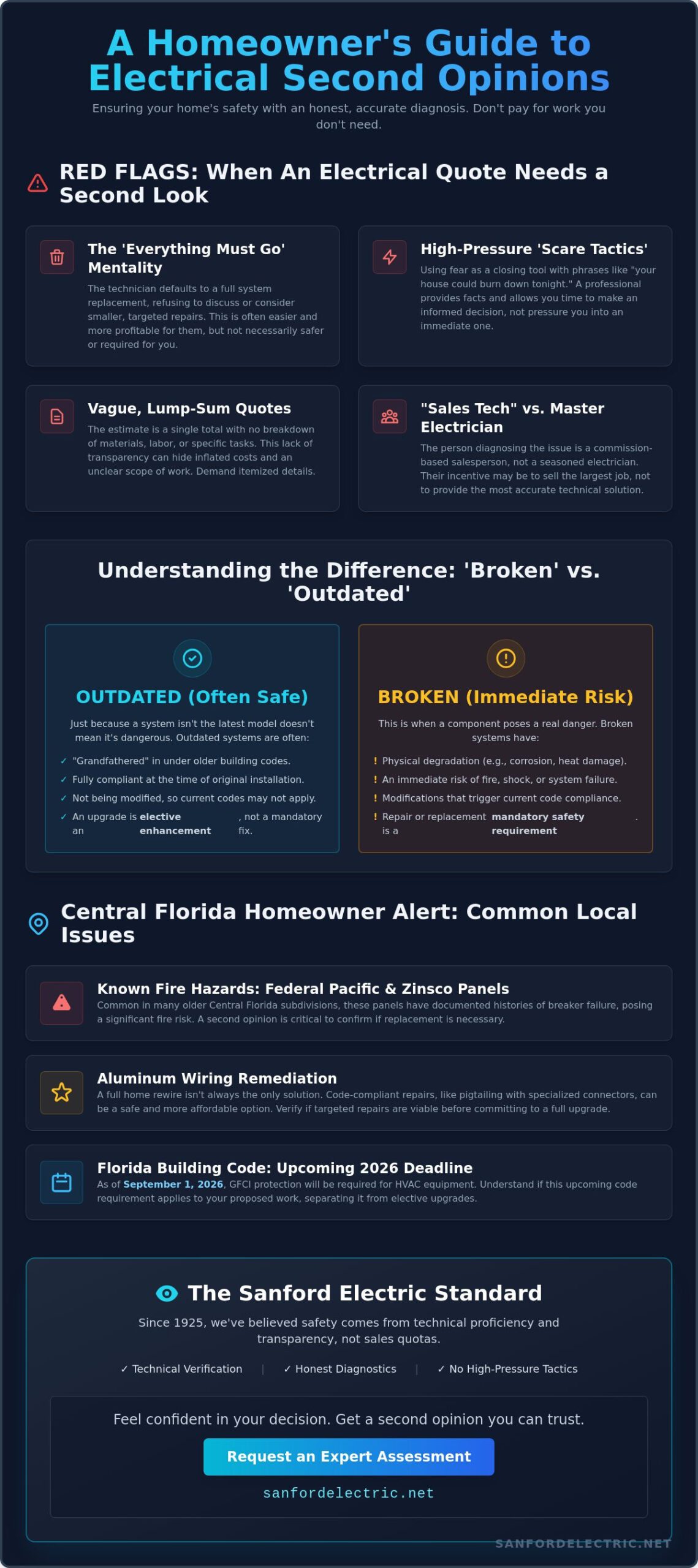
It is a common misconception that “outdated” equals “dangerous.” The national standard for safe electrical installation is updated every three years to include the latest safety technologies. However, the National Electrical Code (NEC) generally allows existing systems to be “grandfathered” in as long as they were compliant at the time of installation and aren’t being modified. An upgrade becomes a mandatory safety requirement when a component’s physical degradation poses an immediate risk of fire or shock, or when modern modifications trigger current compliance mandates. Just because your panel doesn’t look like the 2026 models doesn’t mean it’s failing its primary job of protecting your home.
Protecting Your Home from High-Pressure ‘Scare Tactics’
Be wary of technicians who use fear as a closing tool. Phrases like “your house could burn down tonight” or “I can’t leave this house in good conscience without a signature” are classic red flags. A reputable professional understands that major repairs are a significant decision. They will encourage you to take a breath and look at the facts. If you feel pressured, it’s a clear reason to get a second opinion on electrical work from a trusted local authority. For homeowners who want a baseline of their system’s health without the sales pitch, a professional electrical safety inspection Orlando provides a documented, objective look at what actually needs attention versus what can wait.
Red Flags: When an Electrical Quote Should Trigger a Second Look
A professional electrical quote should function as a technical roadmap, not a vague ransom note. When an estimate lacks detail, it often hides a lack of expertise or an attempt to inflate the project’s scope. Choosing to get a second opinion on electrical work is essential when a contractor provides a lump sum total without breaking down the specific components or labor required. Transparent documentation is the hallmark of a legacy institution. If a technician cannot provide a clear explanation for every dollar on the page, they are likely prioritizing their bottom line over your home’s stability.
The identity of the person performing the diagnosis is equally important. In many large service companies, the person sent to your home is a “sales technician” rather than a Master Electrician. These individuals are often trained in high-pressure sales tactics and may receive commissions based on the total value of the work they sell. This model incentivizes them to find problems that don’t exist. Always verify if the person diagnosing your system has the field experience to understand the nuances of Central Florida’s older electrical infrastructure. A lack of written detail is the #1 sign of an inflated estimate.
The ‘Everything Must Go’ Mentality
Some contractors default to a full system replacement because it is easier and more profitable than troubleshooting a specific fault. They may push for a complete electrical panel upgrade Orlando when a simple breaker replacement or a localized wiring repair would suffice. While modernizing your system offers long-term benefits, it should be your choice, not a forced requirement. Before agreeing to a total overhaul, use this checklist to challenge the recommendation:
- Can you show me the physical evidence of heat damage or corrosion?
- Is this a mandatory safety repair required by the 2023 Florida Building Code?
- Are permit fees and local municipality inspections included in this total?
- What is the specific technical reason that a repair is not an option?
Lack of Documentation and Code Citations
Specifics matter in the electrical trade. If a technician claims your system is “unsafe” or “out of code,” demand to see the specific National Electrical Code (NEC) violation they are citing. Vague warnings are often used to bypass a homeowner’s critical thinking. Following the advice from the Federal Trade Commission, you should always obtain multiple estimates for major home repairs to ensure you aren’t being misled by technical jargon. A professional estimate must include permit costs and inspection fees upfront. If these are missing, the contractor may be planning to cut corners or surprise you with “extra” costs later. If you are unsure about the technical necessity of a proposed project, contact a local expert for a steady, honest evaluation based on a century of proven results.
Evaluating the Difference: How to Compare Two Electrical Estimates
Comparing two electrical quotes requires a focus on technical specifications rather than just the final price. When you choose to get a second opinion on electrical work, you are conducting a technical audit of the proposed materials and methods. The lowest price is often the most dangerous choice. A significantly lower bid usually indicates a reduced scope of work or the use of inferior components. For example, an estimate that utilizes high-quality copper components will naturally cost more than one using cheaper aluminum alternatives. Copper provides superior conductivity and long-term safety, making it the professional choice for a stable home infrastructure.
A family-owned business like ours, operating since 1925, views every estimate as the foundation of a multi-generational relationship. We include long-term support and robust warranties because we intend to serve the Central Florida community for another century. A transaction-focused company might offer a lower price today but lack the stability to honor a warranty five years from now. True value is found in the peace of mind that comes from hiring a long-standing institution that stands behind its craftsmanship.
Scope of Work: The ‘Hidden’ Differences
The technical approach to an electrical issue can vary significantly between contractors. One company might propose a simple junction box repair to address a localized fault, while another recommends a completely new circuit run. You must evaluate if the more expensive option provides a permanent solution or if the cheaper one is merely a temporary patch. Additionally, check if the quote includes “making good” on the surrounding area. Does the estimate cover drywall repair and painting after the wires are pulled, or will you be responsible for hiring another contractor to fix the holes? A professional comparison should separate labor hours from material markups to reveal exactly where your investment is going.
Verification of Credentials and Insurance
Before signing any contract, verify that the professional is properly credentialed. You can confirm a Florida electrical contractor’s license through the Department of Business and Professional Regulation (DBPR) website. It is also vital to understand the difference between being “Licensed and Insured” and being “Bonded.” Insurance protects against accidents on your property, while a bond provides a financial guarantee that the work will be completed according to the contract. The high standards expected of a commercial electrical contractor in Orlando should always apply to residential second opinions. If a contractor cannot meet the rigorous professional benchmarks required for a large-scale industrial project, they should not be handling the safety of your family home.
Central Florida Specifics: Technical Red Flags for Local Homeowners
Central Florida presents specific electrical challenges that national companies often overlook. Our region’s unique combination of aging infrastructure and a harsh subtropical climate requires a localized technical perspective. When homeowners encounter high-stakes recommendations regarding specialized local issues, they should get a second opinion on electrical work from a team that has navigated these specific community builds for a century. We understand the nuances of Florida’s construction history and how our environment impacts the longevity of your home’s wiring.
Corrosion is a constant threat in our environment. The high humidity and salt air characteristic of the Central Florida area can lead to rapid oxidation in outdoor equipment. This is particularly evident in outdoor service panels and landscape lighting systems. If a technician notes “green” or “crusty” terminals, it is a legitimate sign of resistance that could lead to failure. Additionally, being the “Lightning Capital of the US” makes whole home surge protection a technical necessity rather than an optional add-on. We have seen how a single afternoon storm can compromise an entire smart home system if the proper safeguards are not in place.
Panel Recalls and Homeowner Insurance
Florida insurance providers are increasingly strict regarding legacy equipment like Federal Pacific Electric or Zinsco units. These brands often fail to trip during a surge, posing a significant fire risk. Many local insurers mandate upgrades before renewing policies. Choosing to get a second opinion on electrical work helps verify if your panel is a genuine recalled model or just an older, safe brand. Our history since 1925 gives us unique insight into the specific subdivisions where these units were installed.
Aluminum Wiring: Repair vs. Replacement
Aluminum wiring was standard in many Central Florida homes built between the mid-1960s and mid-1970s, especially in Sanford and Lake Mary. While these connections can become unstable, a full house rewire is not always necessary. Code-compliant remediation using AlumiConn connectors or CO/ALR devices often provides a safe, permanent solution. If you have been told a total rewire is your only option, request an honest evaluation to explore all safe, cost-effective alternatives for your home.
The Sanford Electric Standard: Quality Service Since 1925
Choosing to get a second opinion on electrical work is a step toward long-term stability for your home. At Sanford Electric Co. II, Inc., our four-generation family history informs every diagnosis we make. We do not view a project as a single transaction; we see it as a commitment to a neighbor. Since 1925, we have prioritized “right-sizing” solutions. This means we identify the exact technical requirement to keep your home safe and code-compliant without adding unnecessary components to the bill. Our technicians operate with a sense of personal accountability that only a family-owned business can provide.
Transparency is the core of our diagnostic process. Many corporate service companies utilize commission-based sales models that incentivize technicians to find “problems” that require expensive replacements. We reject this approach. Our experts are trained to focus on technical proficiency and safety protocols. When we review a quote from another contractor, we provide a calm, authoritative assessment. We explain the “why” behind every recommendation, ensuring you have the peace of mind that comes from hiring a trusted local anchor.
A Century of Reliability in Central Florida
The evolution of electrical safety since 1925 has been significant. Our team stays ahead of these changes by maintaining a deep understanding of both legacy systems and the latest regulations. While Florida is currently working under the 2023 National Electrical Code, we are already preparing for the expanded safety requirements found in the 2026 NEC. This forward-thinking approach has earned us the reputation of being the “Electrician’s Electrician.” Other contractors often call us when they encounter complex issues they cannot solve. We proudly serve the Central Florida area, including Sanford, Windermere, and Winter Park, bringing a century of experience to every job site.
Your Path to an Honest Diagnosis
Obtaining a professional review of an existing quote is a straightforward process. When you get a second opinion on electrical work from us, we perform a comprehensive safety inspection to verify the original findings. We look for physical evidence of wear, check for code compliance, and evaluate the proposed materials. To begin, you can submit your existing estimate to our team for a technical audit. We will provide a functional and direct breakdown of what is necessary for safety and what is elective. This methodical approach ensures your home remains a stable environment for your family. Schedule your second opinion with Sanford Electric Co II, Inc. today.
Secure the Safety and Stability of Your Home
Maintaining a safe electrical system requires making informed decisions based on technical facts rather than high-pressure sales tactics. If you don’t feel confident in an estimate, identifying vague line items and understanding the difference between mandatory repairs and elective upgrades protects both your family and your finances. Local issues like aging aluminum wiring or specific panel recalls require a seasoned perspective to determine the most cost-effective, code-compliant path forward.
Choosing to get a second opinion on electrical work is the most reliable way to verify a complex diagnosis. Sanford Electric Co. II, Inc. has served the Central Florida community since 1925. As a family-owned and operated business for four generations, we employ licensed and insured Master Electricians who prioritize technical proficiency over commission targets. We provide the steady, professional guidance you need to ensure your home’s infrastructure remains permanent and unshakeable.
Get a Professional Second Opinion from Sanford Electric and gain the clarity you deserve for your next home project. We look forward to providing the same dependable service we have delivered for over a century.
Frequently Asked Questions
Is it worth getting a second opinion on a small electrical repair?
Yes, it is worth it if the initial technician suggests that a minor issue requires a major system overhaul. Some companies use small service calls as an opportunity to find “critical” failures that don’t exist. If a simple outlet repair leads to a recommendation for a full rewire, a second look is essential to protect your home and your budget.
What should I do if two electricians give me completely different diagnoses?
Request that both contractors show you the physical evidence of the problem and cite the specific code violation. If the technical explanations don’t align, seek a third opinion from a Master Electrician at a legacy institution. A contractor with a century of experience in Central Florida can often provide the definitive technical answer based on local building history.
Does a second opinion on electrical work cost money?
Most reputable electrical contractors charge a fee for a diagnostic visit or a service call. This fee covers the technician’s time, travel, and the use of specialized testing equipment. While some businesses may offer “free” estimates, these are often sales calls in disguise rather than a thorough technical audit of your home’s safety and stability.
Can a second opinion help with an insurance-mandated electrical upgrade?
Yes, a second opinion is highly beneficial for insurance-mandated upgrades. Insurers often flag specific panel brands like Federal Pacific or Zinsco based on general risk profiles. A technical verification can determine if your equipment is truly a high-risk model or if a more cost-effective remediation is available under current Florida building standards.
How do I know if an electrician is using ‘scare tactics’ to sell me a panel?
You can identify scare tactics by the use of extreme urgency and emotional language. A professional will explain the technical risk and provide options for repair or replacement. If a technician claims your home is in immediate danger but cannot show you scorched wires or melted components, they are likely using pressure to close a sale.
Should I tell the second electrician what the first one quoted me?
It is best to withhold the previous quote until after the new technician provides their own assessment. This ensures you get a second opinion on electrical work that is completely unbiased and based solely on the physical evidence found. Once they provide their diagnosis, you can compare the two scopes of work to see where the technical discrepancies lie.
What are the most common electrical items that are misdiagnosed?
Main electrical panels and aluminum wiring terminations are the most frequently misdiagnosed items. Technicians with limited field experience may recommend a full replacement for a panel that only needs a specific breaker or a thorough cleaning of the bus bar. Similarly, localized aluminum wire remediation is often overlooked in favor of expensive whole-home rewiring projects.
How long does a second opinion consultation typically take?
A professional consultation typically takes between 30 and 60 minutes. This timeframe allows the electrician to perform a visual inspection, test specific circuits, and discuss their findings with you in detail. Complex issues involving multi-generational home additions or commercial systems may require more time for a complete and accurate technical verification.