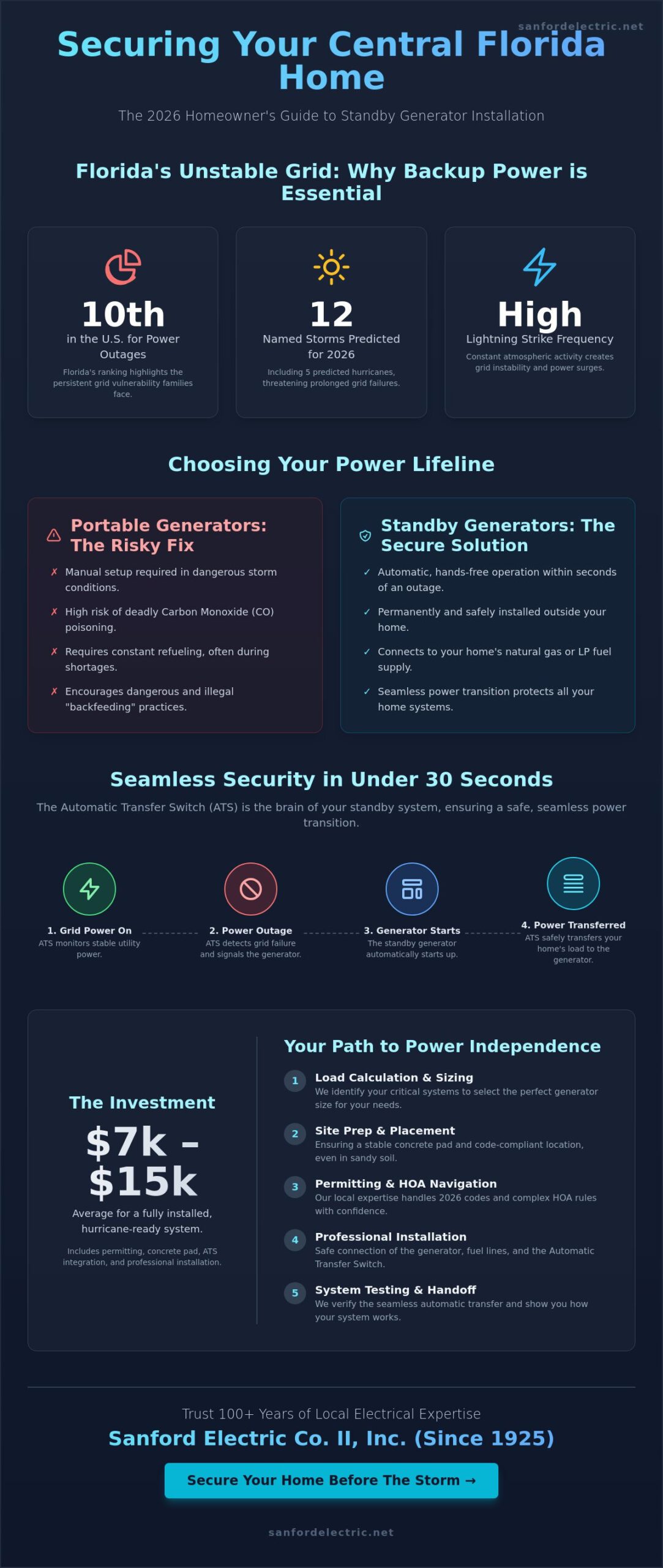
Florida currently ranks 10th in the United States for the most power outages as of April 2026, a reality that transforms a standby system from a luxury into a household essential. At Sanford Electric Co. II, Inc., we’ve provided quality service since 1925, and we know that the fear of a dark, sweltering home during a hurricane is a heavy burden for any local family. Choosing the right generator installation involves more than just picking a brand; it requires navigating local HOA rules and technical sizing to ensure your HVAC and appliances stay running when the grid fails.
You deserve a seamless transition to backup power without the stress of complex permitting or installation errors. This 2026 guide draws on our century of local expertise to help you secure your Central Florida home against the 12 named storms predicted for this season. We’ll explore the latest high-efficiency models, explain how the 2026 EPA permitting reforms speed up your project, and break down the $7,000 to $15,000 average investment for a fully installed system. You’ll gain a clear path to the peace of mind that only a professionally installed, hurricane-ready infrastructure can provide.
Key Takeaways
- Identify the critical home systems, from medical equipment to food preservation, that require uninterruptible power during a major storm.
- Learn how an Automatic Transfer Switch (ATS) creates a seamless, hands-free transition to backup power without the need for manual intervention.
- Master the planning phase by understanding the load calculations and site requirements essential for a successful generator installation in Central Florida.
- Explore the specific site preparation techniques, such as concrete pad placement, that ensure your system remains stable in Florida’s unique sandy soil.
- Discover how 100 years of local electrical expertise helps you navigate complex HOA rules and modern 2026 building codes with confidence.
Why Generator Installation is Essential for Central Florida Homes
Living in Central Florida means respecting the power of the Atlantic hurricane season. For 2026, the Climate Adaptation Center predicts 12 named storms and five hurricanes, with a high risk of rapid intensification due to rising sea temperatures. These weather patterns often lead to prolonged grid failures that threaten more than just your comfort. A professional generator installation secures your home’s infrastructure, protecting temperature-sensitive medications, preventing thousands of dollars in food spoilage, and maintaining critical medical devices. While Duke Energy reported lower average outage durations in 2025, major storms still leave families in the dark for days. We’ve seen these patterns play out since we opened our doors in 1925, and we understand that true security requires a permanent solution rather than a temporary fix.
Protecting Your Home from Central Florida Storms
Residents in Altamonte Springs and Apopka face some of the highest lightning strike frequencies in the country. This constant atmospheric activity creates grid instability that can fry sensitive electronics even before a storm officially arrives. To build a truly resilient system, we often recommend whole home surge protection in tandem with your backup power source. This dual approach ensures that your home is shielded from both the initial strike and the subsequent power surges when the grid fluctuates. Our century of local experience allows us to design systems that account for these specific Florida environmental hazards, providing a level of safety that national installers often overlook.
The Limitations of Portable Generators
Many homeowners consider portable units a cost-effective alternative, but these temporary fixes carry significant risks. Portable generators require manual setup in the middle of a storm, often involving heavy lifting and exposed cables in wet conditions. More importantly, they pose a severe threat of carbon monoxide poisoning if not placed perfectly. To understand the safety and efficiency of a permanent system, it helps to learn how standby generators work using an automatic transfer switch. Unlike portables, which require you to manage fuel during regional shortages, a standby unit connects directly to your home’s fuel supply. This eliminates the need for “backfeeding” through a dryer outlet, a dangerous and illegal practice that puts utility workers and your family at risk. A professionally installed standby system offers a disciplined, reliable response to power loss that portable units simply cannot match.
How Whole-Home Standby Generators Provide Seamless Security
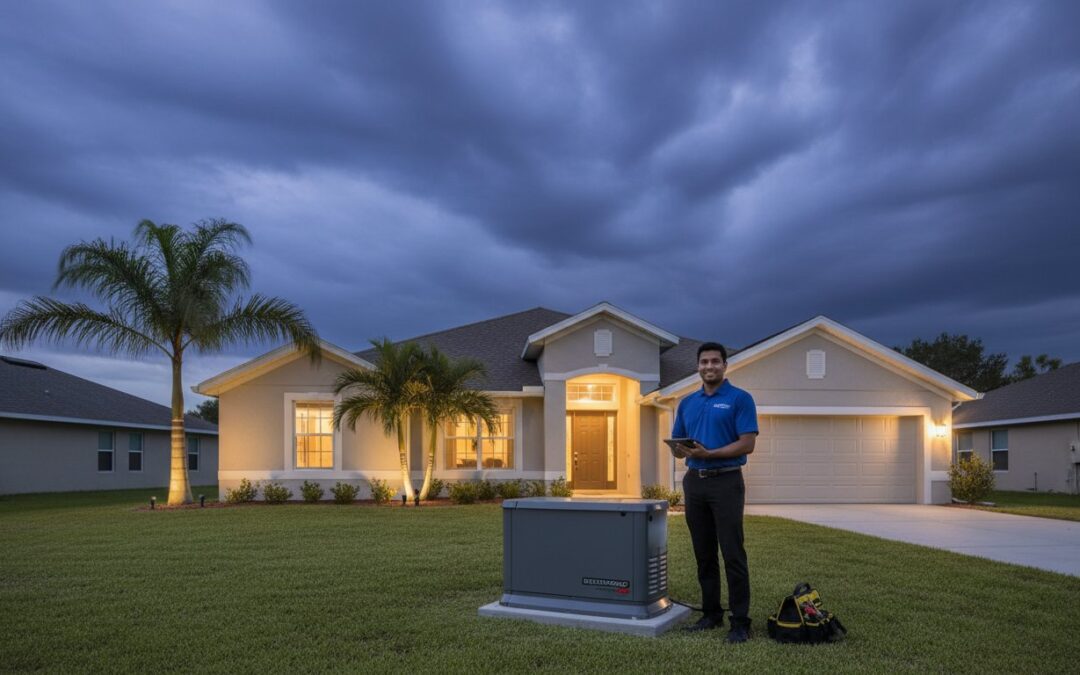
A standby generator is a permanently installed system that acts as a vigilant sentry for your home’s power supply. Unlike portable units that require manual intervention, these systems start automatically the moment a grid failure occurs. They integrate directly with your existing natural gas or liquid propane lines, ensuring a continuous fuel source without the need for refueling trips during a storm. Since 1925, Sanford Electric Co. II, Inc. has prioritized the safety of Central Florida residents, and we believe a permanent generator installation is the most reliable way to maintain stability when local utilities falter. These systems sit outside your home much like a central air conditioning unit, ready to respond within seconds of a blackout.
The Role of the Automatic Transfer Switch
The Automatic Transfer Switch (ATS) serves as the brain of the entire operation. It constantly monitors the incoming voltage from the utility company. If the power drops below a safe level, the ATS triggers the generator to start and then shifts your home’s electrical load to the backup source. This process typically takes less than 30 seconds. Crucially, the ATS also disconnects your home from the municipal grid. This prevents “backfeeding,” which could otherwise send dangerous high-voltage electricity back into the lines where utility workers are attempting repairs in Windermere or Winter Park. Once the switch detects that municipal power is stable, it seamlessly transfers the load back and shuts the generator down. Our technicians handle the complex integration of the ATS with your main electrical panel to ensure this transition is both safe and code-compliant.
Generac Technology and Innovation
Generac technology remains the industry standard for homeowners in Heathrow and Lake Mary because of its disciplined performance and smart features. The 2026 models, including the 24kW and 26kW Guardian series, come equipped with Wi-Fi and app-based monitoring as a standard feature. You can check your system’s status or receive maintenance alerts directly on your smartphone from anywhere in the world. These units also perform a weekly “Self-Test” mode to ensure every component is operational without user intervention. For noise-sensitive neighborhoods, the Quiet-Test technology allows the generator to run its exercise cycle at a lower RPM, making it no louder than a standard idling car. If you’re ready to secure your property, our team provides professional electrical consultations to determine the exact power needs of your household.
Sizing and Site Selection: Planning Your Installation in Orlando
A successful generator installation begins with a disciplined planning phase. Since 1925, our team has understood that Central Florida’s unique environment demands more than a one size fits all approach. We don’t just look at the square footage of your home; we analyze the specific electrical architecture of your property. Proper site selection involves balancing technical safety codes with the aesthetic standards of your neighborhood. In communities across Orlando and Sanford, we must account for high water tables and the potential for localized flooding during our intense summer downpours. A system that isn’t elevated or positioned correctly can suffer terminal damage before the storm even passes.
Site placement must strictly adhere to the Florida Building Code and manufacturer safety specifications. This includes maintaining specific distances from windows, doors, and vents to prevent carbon monoxide from entering the living space. We also consider the proximity to your property line and the impact of noise on your neighbors. While modern units are quieter than ever, strategic placement behind natural barriers or using specialized dampening pads can further reduce the sound profile during the weekly self-test cycles.
Determining Your Power Requirements
We categorize your power needs into “essential” and “whole-home” loads. Essential loads include your refrigeration, well pumps, and basic lighting. However, for most Central Florida families, air conditioning is a non-negotiable requirement for safety and mold prevention. High-draw appliances like pool pumps and electric ranges require careful calculation to avoid overloading the system. In many older homes, we find that an electrical panel upgrade is a necessary prerequisite. This ensures your home’s infrastructure can safely handle the transfer of power and the sustained load of a 20kW to 26kW unit without risking a fire or equipment failure.
Local Permitting and HOA Compliance
Navigating the bureaucracy of local government is often the most time-consuming part of a generator installation. Seminole and Orange Counties have distinct permitting processes that require detailed site plans and electrical diagrams. We handle these filings directly, ensuring every project meets the latest 2026 standards for wind-resistant anchoring. For residents in managed communities like Wekiwa Springs and Winter Springs, we also coordinate with Homeowners Associations (HOAs). These organizations often have specific rules regarding:
- Screening requirements using fences or landscaping
- Permissible decibel levels during exercise cycles
- Specific placement restrictions to maintain community aesthetics
Our 100 years of local presence means we have established relationships with building departments, which helps us move your project through the approval phase efficiently.
The Step-by-Step Installation Process: From Permit to Power
A professional generator installation is a methodical process that requires disciplined coordination between electrical and gas experts. At Sanford Electric Co. II, Inc., we’ve refined this workflow over a century of service to ensure every connection is stable and every safety protocol is met. Once the planning and permitting phases are complete, our technicians begin with site preparation. In Central Florida, our sandy soil presents unique challenges for equipment stability. While some installers use gravel beds, we prefer reinforced concrete pads to prevent the unit from shifting or sinking during heavy summer rains. This foundation ensures the generator remains level, which is critical for proper engine lubrication and long-term mechanical health.
Our team handles the mounting of the automatic transfer switch (ATS) next to your existing electrical meter or main distribution panel. This is a high-precision task that involves intercepting the main power lines to create a safe gateway for backup energy. We coordinate closely with local utility companies like Duke Energy or FPL to manage the necessary power disconnects, ensuring the work is performed without risk to the municipal grid or our technicians. If you are ready to begin this process, you can schedule a professional load analysis with our master electricians today.
Electrical and Fuel Line Integration
The core of the installation involves wiring the generator into your home’s main service entrance. Our technicians adhere strictly to the 2026 National Electrical Code (NEC) standards, which include specific requirements for grounding and circuit separation. Simultaneously, we coordinate with licensed gas professionals to run high-pressure fuel lines from your natural gas meter or propane tank. This integration requires exact pressure regulation to ensure the generator engine receives a consistent fuel flow, even when your home’s furnace or water heater is running. We perform multiple pressure tests and soap-bubble leak checks to guarantee the integrity of every fitting before the system is ever energized.
Final Commissioning and Testing
The final step is the commissioning of the system, where we simulate a total utility power failure. We disconnect the municipal feed to verify that the ATS detects the loss and starts the generator within the expected 10 to 30-second window. During this orientation, we walk you through the smartphone application so you can monitor your system’s status from anywhere. We also establish a regular maintenance schedule to ensure your investment is ready for the next storm. This final walkthrough isn’t complete until you feel confident operating the system and understand the disciplined self-test cycles that keep the engine primed for action.
Trusting Your Home’s Power to Sanford Electric Co II, Inc.
Choosing a contractor for your generator installation is a decision that impacts your family’s safety for decades. While big-box retailers offer generic installation services through third-party subcontractors, Sanford Electric Co. II, Inc. provides the accountability of a local institution. We’ve operated in Central Florida since 1925, building a reputation on technical proficiency and disciplined workmanship. Our technicians don’t just follow a checklist; they apply a century of collective knowledge to every project. This ensures your system is not only code-compliant but optimized for the specific electrical demands of your home and neighborhood.
Quality service isn’t a marketing slogan for us; it’s our heritage. We combine our deep roots with specialized expertise in Generac systems to deliver results that meet the “Sanford Standard.” This means using superior materials, like the reinforced concrete pads discussed earlier, that survive the harsh Florida climate long after the initial warranty expires. We believe in doing the job right the first time because we live in the same communities we serve.
A Century of Local Electrical Expertise
Our business has remained family-owned and operated for four generations. This longevity creates a personal level of accountability that national chains cannot match. We’ve evolved alongside the electrical industry, expanding our capabilities to include modern residential technology. Our team is the preferred choice for sophisticated projects, ranging from standby power systems to professional EV charger installations. This breadth of experience allows us to view your home’s electrical system as a whole, ensuring that new additions integrate seamlessly with your existing infrastructure without overloading your service entrance.
Your Partner in Long-Term Power Security
A standby generator is a long-term investment that requires more than a one-day installation. It needs a partner who’ll be there for the life of the machine. We provide the ongoing support, diagnostics, and maintenance required to keep your system in peak condition for the 2026 hurricane season and beyond. When you call us, you speak with local experts who understand the specific grid challenges in Sanford, Lake Mary, and the surrounding areas. We take pride in being a permanent fixture in the community, providing the stability and peace of mind you need when the clouds gather. We don’t just install equipment; we build lasting relationships based on trust and technical excellence.
Contact Sanford Electric Co II, Inc. today for your generator consultation!
Securing Your Home’s Future Against the Storm
Securing your property with a permanent power solution is a disciplined investment in your family’s safety and property value. We’ve explored how a professional generator installation integrates with your home’s infrastructure to provide an automatic, seamless response to grid failures. By choosing a system tailored to your specific load requirements and ensuring it meets the 2026 building codes, you eliminate the risks associated with manual portable units. This proactive approach ensures that critical systems like medical devices and air conditioning remain operational during the most severe weather events.
Sanford Electric Co. II, Inc. remains a trusted local anchor, offering Quality Service Since 1925. As a family-owned business and a Generac Authorized Dealer, we bring a century of technical proficiency to every project. Our licensed and insured technicians handle the complexities of permitting and utility coordination so you don’t have to. We take pride in our multi-generational presence in Central Florida and stand behind every connection we make. Our commitment to high standards means your home’s power security is in the hands of seasoned experts who’ve served this community for four generations.
Schedule Your Free Generator Consultation with Sanford Electric Today!
You can face the next hurricane season with the confidence that your home will remain a powered, safe haven for those you love.
Frequently Asked Questions
How much does a whole-home generator installation cost in Central Florida?
The average cost for a fully installed whole-house system ranges from $7,000 to $15,000 as of May 2026. In Orlando specifically, the average installation cost is approximately $1,903, with a typical range between $420 and $3,385 depending on the complexity. These figures include the generator unit, labor, and local permitting fees which generally range from $200 to $500 across Seminole and Orange Counties.
What size generator do I need to run my air conditioner and refrigerator?
A 13kW to 16kW unit typically powers a refrigerator and most essential home circuits, but a 20kW to 22kW generator is the standard for whole-home coverage including central air conditioning. We calculate the specific starting wattage of your HVAC system to ensure the unit handles the initial surge. Proper sizing is critical to prevent system overloads and ensures your fuel efficiency remains high during extended outages.
How long does the actual installation process take from start to finish?
The physical generator installation usually takes one to two days of on-site labor once the permits are issued. However, the total project timeline often spans several weeks due to municipal approvals and utility coordination. In 2026, new EPA guidance allows us to begin site preparation like trenching and pouring concrete pads before final permits are finalized, which helps shorten the overall project duration for our clients.
Can I install a standby generator myself to save on labor costs?
No, you shouldn’t attempt a DIY installation because it requires specialized knowledge of high-voltage electrical systems and high-pressure fuel lines. Florida building codes require a licensed professional to pull permits and perform the work to ensure safety and code compliance. Our family-owned business has provided professional electrical services since 1925, and we prioritize the disciplined safety protocols that a self-installation simply cannot guarantee.
Does a standby generator require regular maintenance to stay under warranty?
Yes, manufacturers like Generac and Kohler require at least one professional maintenance visit per year to keep the warranty valid. This service includes oil changes, filter replacements, and spark plug inspections to ensure the engine remains primed for a storm. We recommend keeping a detailed log of all service records, as this documentation is necessary if you ever need to file a warranty claim for parts or labor.
Will a generator increase the resale value of my home in Orlando or Sanford?
A professionally installed standby generator typically increases a home’s resale value by approximately 3% to 5% in the Central Florida market. Prospective buyers in our region view backup power as an essential infrastructure investment rather than a luxury. This feature provides a significant competitive advantage during the hurricane season, as it offers the immediate peace of mind that many families prioritize when house hunting.
What fuel source is best for a standby generator in Florida: Natural Gas or Propane?
Natural gas is the preferred choice for many residents because it offers an unlimited fuel supply through existing municipal lines. If your neighborhood doesn’t have natural gas, liquid propane is a highly reliable alternative that we store in 250 to 500-gallon tanks on your property. Propane is an excellent fuel for Florida because it doesn’t degrade over time, ensuring your system is ready even after months of inactivity.
How loud is a Generac standby generator during operation?
Modern Generac units operate at approximately 65 to 70 decibels while under a full load, which is similar to the noise level of a standard central air conditioning unit. During the weekly “Quiet-Test” self-exercise cycle, the noise level drops to about 55 to 60 decibels. This disciplined sound engineering allows the units to remain compliant with noise ordinances in densely populated neighborhoods throughout Lake Mary and Heathrow.