

What if that dead outlet in your kitchen isn’t actually broken, but is performing a life-saving maneuver right under your nose? Mastering electrical troubleshooting for outlets not working often starts with understanding that your home’s electrical system is designed to protect you. At Sanford Electric, LLC, we’ve served the Central Florida community since 1925, and we know that a sudden loss of power is more than just a nuisance. It’s often a sign that your home’s safety features, like the 2026 NEC’s new High-Frequency (HF) rated GFCIs, are functioning exactly as intended.
It’s frustrating when you can’t charge your phone, and the fear of hidden electrical shorts or unexpected repair costs is a heavy burden for any homeowner. We agree that you deserve both convenience and safety. This guide will teach you how to safely diagnose dead outlets and identify when a simple reset will solve the issue. You’ll also learn about the 2026 Florida Building Code updates, such as expanded GFCI requirements for all kitchen receptacles, so you can determine if it’s time to call a trusted professional to secure your home’s legacy of safety.
Key Takeaways
- Learn how to differentiate between a simple device failure and a systemic circuit issue by performing basic diagnostic checks on your home’s power flow.
- Master the basics of electrical troubleshooting for outlets not working by identifying how a single tripped GFCI can safely disable power in multiple rooms.
- Identify critical warning signs of terminal outlet failure, such as charring or loose internal contacts, which indicate a high risk of dangerous electrical arcing.
- Understand how the unique humidity and salt air of Central Florida accelerate the oxidation of copper wiring and compromise your home’s electrical stability.
- Recognize the “Three Strike” rule to determine exactly when a persistent electrical issue requires professional intervention to ensure your property remains fire-safe.
Initial Electrical Troubleshooting: 3 Immediate DIY Safety Checks
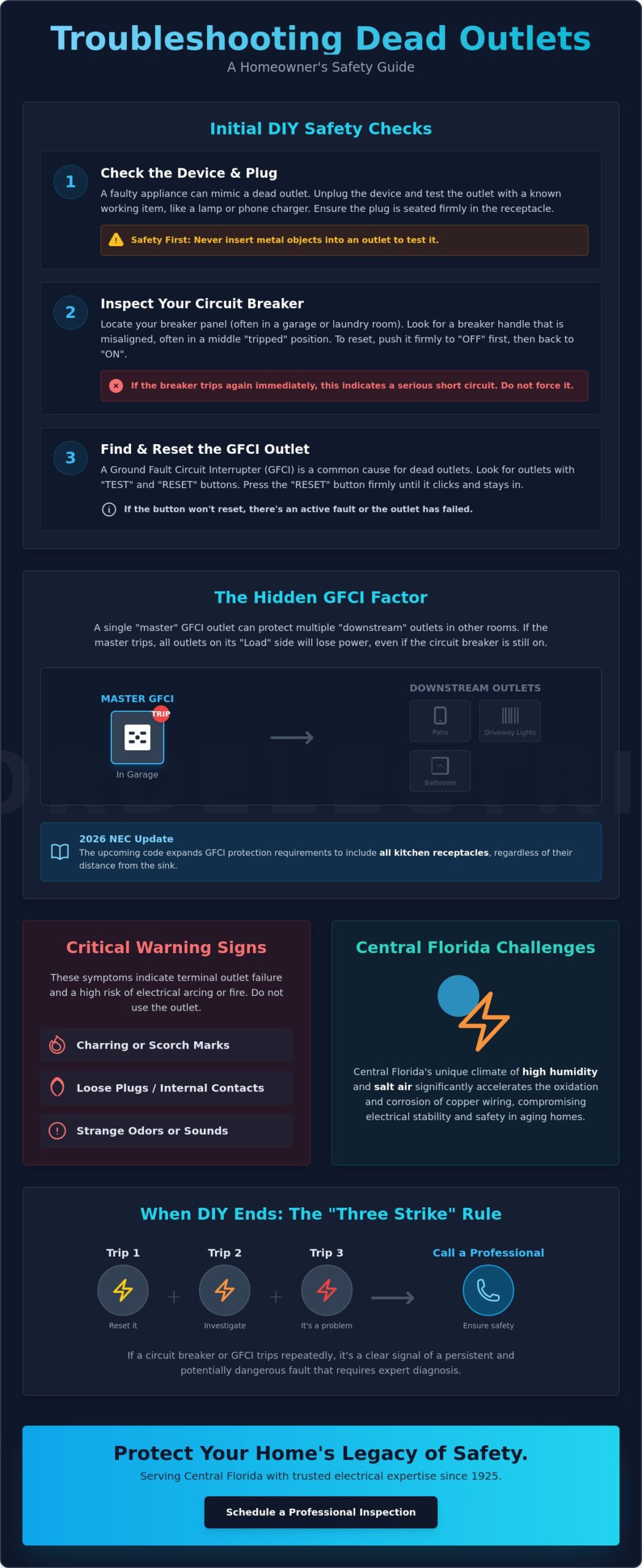
When an outlet stops working, the first step in electrical troubleshooting for outlets not working is to determine the scale of the problem. Is it just one plug, or has the whole room gone dark? Start by checking the device itself. A faulty lamp cord or a fried phone charger often mimics a dead outlet. Swap the device with a known working appliance, like a small hair dryer or a different lamp. Ensure the plug is seated firmly against the receptacle; a small air gap can break the connection entirely. Safety remains the highest priority at Sanford Electric, LLC. Never insert screwdrivers, pliers, or any metal tools into an outlet to feel for a loose connection. Since 1925, we’ve seen the dangerous results of DIY accidents, and we want to ensure your home remains a safe environment.
Step 1: Inspecting Your Circuit Breaker Panel
Head to your circuit breaker panel to check for a system-level trip. In Central Florida homes, these are typically found in the garage, the laundry room, or occasionally on an exterior wall. Open the door and look for a breaker handle that isn’t aligned with the others. Many modern breakers won’t flip all the way to the “Off” position when they trip. Instead, they hang in a middle or center-trip position. You might see a small orange or red flag in a window. To properly reset it, you must push the handle firmly to the “Off” position until you hear a click, then flip it back to “On”. If the breaker trips again immediately, don’t force it. This indicates a persistent short circuit that requires professional attention from a seasoned expert.
Step 2: The GFCI Reset Protocol
The most common culprit for a dead outlet is a tripped Ground Fault Circuit Interrupter. What is a GFCI? It’s a sensitive safety device designed to shut off power in milliseconds if it detects a leak in the electrical current. Look for the “Test” and “Reset” buttons on the face of the outlet. Press the “Reset” button until it stays in with a firm click. If the button won’t stay depressed, there’s likely an active fault or the outlet itself has reached the end of its life. We recommend using a simple plug-in circuit tester to verify that power has returned to the circuit. This methodical approach to electrical troubleshooting for outlets not working ensures you don’t overlook a simple fix before calling for help. Our family-owned business has provided quality service since 1925, and we believe a well-informed homeowner is a safer homeowner.
The Hidden GFCI Factor: Why One Reset Button Controls Multiple Rooms
It is a frequent source of confusion for Central Florida homeowners: a patio outlet stops working, but the circuit breaker remains in the “On” position. This phenomenon occurs because of how residential circuits are wired using “Line” and “Load” connections. In this configuration, a single Ground Fault Circuit Interrupter (GFCI) acts as a master protector for every outlet located downstream on the same circuit. If the master outlet detects a fault, it cuts power to everything connected to its “Load” side. Sanford Electric, LLC has navigated these complex wiring patterns since 1925, ensuring that local homes remain both functional and code-compliant. When you begin electrical troubleshooting for outlets not working, you must look beyond the dead outlet itself and find the master device that governs it.
This safety logic is designed to protect “wet” areas of your home using fewer expensive components. For example, a single GFCI in your garage might be wired to protect your outdoor outlets, your driveway lights, and even a secondary bathroom. The 2026 National Electrical Code (NEC) has expanded these requirements, now mandating GFCI protection for all kitchen receptacles regardless of their distance from the sink. Understanding the landscape of your home’s specialized electrical outlets is the key to restoring power without unnecessary stress.
Where to Look for “Master” GFCI Outlets
If an outlet fails, check the most common “master” locations first. These include bathrooms, kitchens, and laundry rooms. However, builders often place the primary reset button in less obvious spots. Check your garage walls, the area near your pool equipment, and even inside pantry closets. Sometimes, a master GFCI is hidden behind a large appliance like a refrigerator or a washing machine. If your home was built or renovated recently, it may even have High-Frequency (HF) rated GFCIs, which are specifically designed to handle modern variable-speed motors without nuisance tripping.
When a GFCI Refuses to Reset
A GFCI that won’t stay in the “Reset” position is usually sending a clear message. These devices have a typical lifespan of 10 to 15 years, but the intense heat and humidity of Central Florida can accelerate internal component failure. If the button pops back out immediately, the outlet may have reached its “End of Life” or it might be detecting an active ground fault. This is a safety feature, not a defect. If you have checked for moisture and unplugged all devices but the outlet still won’t reset, it’s time to stop DIY efforts. If you suspect your home’s protection is outdated, a professional electrical safety inspection from a trusted technician can provide the peace of mind you need.
Identifying Physical Signs of Outlet Failure and Wiring Hazards
Visual and auditory cues are often the most reliable indicators of a serious electrical problem. While resetting a breaker might provide a temporary fix, physical damage to a receptacle suggests an underlying hazard that requires immediate attention. Discoloration or brown charring around the plug slots is a definitive sign of electrical arcing. This occurs when the current jumps across a gap between loose connections, generating intense heat. We also frequently encounter “wobbly” plugs that fall out of the wall with the slightest touch. When the internal metal contacts within an outlet wear out or stretch, they lose their grip. This creates electrical resistance, which leads to heat buildup and eventual component failure. If your electrical troubleshooting for outlets not working reveals these signs, the outlet is no longer safe to use.
Sensory details shouldn’t be ignored. If you hear a persistent sizzling or buzzing sound coming from the wall, you are likely hearing electricity jumping a gap. A metallic or fishy smell often indicates that plastic components are melting due to high temperatures. Following U.S. Fire Administration electrical safety tips, you should immediately disconnect power at the main breaker if you detect these odors. At Sanford Electric Co. II, Inc., we have emphasized these safety protocols since 1925 to protect our Central Florida neighbors from preventable house fires.
Loose Wiring and “Back-Stabbed” Connections
Many homes constructed between 1990 and 2010 were wired using “back-stabbed” connections. In this method, wires are pushed into spring-loaded holes on the back of the outlet rather than being secured under side-terminal screws. These connections are notorious for failing over time. As the wires heat up and cool down during normal use, they expand and contract. This movement causes the internal clips to lose their tension, leading to an intermittent or total loss of power. Because power often “daisy-chains” from one device to the next, a single loose wire in the kitchen could be the reason your living room outlets are dead. Our technicians prefer the reliability of side-terminal screw connections to ensure long-term stability.
Physical Damage and Internal Short Circuits
Cracked faceplates and broken plastic housings are more than just cosmetic eyesores. They expose live internal components to dust, debris, and moisture. In the high-humidity environment of Central Florida, moisture can accumulate inside a damaged receptacle, creating a path for a persistent short circuit. If your electrical troubleshooting for outlets not working identifies a cracked or broken outlet, replacement is the only safe option. Attempting a DIY fix without a deep understanding of grounding can lead to accidental shock. Since our founding in 1925, we’ve remained committed to high standards of professional installation, ensuring every replacement is grounded and secured according to the latest safety codes.
Central Florida Electrical Challenges: Humidity, Corrosion, and Aging Homes
Central Florida’s climate presents a unique set of challenges for residential electrical systems that many generic guides overlook. High humidity levels act as a constant catalyst for oxidation, which can quickly degrade the copper components inside your receptacles. When you engage in electrical troubleshooting for outlets not working, it is vital to consider the age and specific location of your property. Homes in coastal-adjacent areas like DeLand and Geneva face the additional burden of salt air. This airborne salt accelerates the corrosive process on metal terminals, often leading to intermittent power or total outlet failure. Sanford Electric Co. II, Inc. has addressed these regional issues since 1925, providing the technical expertise needed to manage Florida’s harsh environment.
For properties built during the 1960s and 1970s, aluminum wiring remediation is a critical safety consideration. Aluminum expands and contracts at a different rate than copper. This thermal movement often leads to loose connections and significant fire hazards at the outlet interface. If your home falls into this age bracket, a dead outlet might be a symptom of a much larger systemic risk. We have spent decades helping homeowners identify these hidden dangers to ensure their electrical systems remain stable and dependable.
Corrosion and High Humidity Issues
Outdoor and garage outlets are typically the first to fail in our local climate. You may notice a distinct green, crusty buildup on the wire terminals when a failing outlet is inspected. This is oxidation in its most visible form. To combat this, the 2026 Florida Building Code requires weather-resistant (WR) rated receptacles for all exterior applications. These specialized outlets feature corrosion-resistant internal components and are built to withstand the relentless moisture that defines Central Florida living. If your outdoor outlets lack the “WR” stamp, they are highly susceptible to premature failure.
Legacy Wiring in Historic Central Florida Communities
Historic districts in Sanford and Winter Park often feature legacy wiring systems that were never designed for the power demands of modern electronics. Many of these homes still utilize two-prong, ungrounded outlets. While adapters allow you to plug in three-prong devices, they do not provide a legitimate path to ground, leaving your expensive equipment vulnerable to surges. If you live in a historic property, an electrical safety inspection Orlando is the first step toward modernizing your system while preserving the home’s character. If you suspect your home’s wiring is compromised by age or the elements, contact us for professional aluminum wiring remediation to secure your property.
When DIY Troubleshooting Ends: Professional Electrical Solutions
There is a definitive line where homeowner intervention should stop and professional expertise must take over. At Sanford Electric Co. II, Inc., we’ve guided Central Florida families through these safety decisions since 1925. We recommend the “Three Strike” rule for any electrical issue. If you’ve reset the breaker and it trips a second time, if your GFCI won’t hold a reset after two attempts, or if you’ve detected the physical signs of heat or odors mentioned earlier, you have reached the limit of safe DIY. Persistent breaker tripping isn’t just a minor annoyance; it’s a protective system signaling a critical failure that could lead to a house fire if ignored.
A single dead outlet is often the first symptom of a deeper infrastructure problem. It may signal that your home’s electrical backbone is struggling to keep up with modern 2026 power demands. In many cases, a localized failure indicates the need for an electrical panel upgrade Orlando to ensure your property remains fire-safe and functional. Professional electrical troubleshooting for outlets not working focuses on finding the “why” behind the failure, ensuring the root cause is addressed rather than just replacing a broken part. This comprehensive approach provides the peace of mind that comes from a stable and secure electrical system.
Our Professional Diagnostic Process
Our technicians don’t rely on guesswork. We use specialized meters to trace circuit continuity and identify dangerous voltage drops that occur behind your walls. We also perform a thorough inspection of the main service panel to look for signs of overheating, terminal fatigue, or corrosion that a homeowner might miss. This methodical process allows us to provide you with clear, upfront options for repair versus replacement. We believe in transparency and technical precision, ensuring you understand the state of your home’s wiring before any work begins.
Quality Service Since 1925
Experience is a quantifiable asset when your home’s safety is on the line. Sanford Electric Co. II, Inc. has remained a pillar of the Central Florida community for over a century because we prioritize reliability and professionalism. Our family-owned business employs only licensed, insured, and background-checked technicians who uphold our high standards of technical excellence. We approach every project with the same deliberate care that has defined our legacy for over 100 years. When you need dependable results and neighborly integrity, you can trust the institution that has seen and solved every possible electrical challenge since 1925.
Securing Your Home’s Electrical Legacy
Understanding the basics of electrical troubleshooting for outlets not working empowers you to handle minor resets with confidence. You now know how to locate hidden master GFCIs and identify the physical warning signs of dangerous arcing. However, the unique humidity of Central Florida and the complexities of the 2026 National Electrical Code often require a more technical approach. Protecting your property means looking beyond a single dead outlet to ensure your entire system is stable and code-compliant.
Sanford Electric Co. II, Inc. has provided dependable service to this community since 1925. As a family-owned and operated institution, we specialize in aluminum wiring remediation and critical panel upgrades that keep older homes safe. Our licensed and insured experts are ready to provide the technical excellence your home deserves. Schedule Your Professional Electrical Inspection with Sanford Electric Co. II, Inc. to restore your peace of mind. We look forward to ensuring your home remains a safe and reliable sanctuary for years to come.
Frequently Asked Questions
Why is only one half of my outlet working?
This usually occurs because the outlet is a “half-hot” receptacle controlled by a wall switch or because the brass tab connecting the two halves has been removed. Check every wall switch in the room to see if it restores power to the dead half. If a switch doesn’t solve it, the outlet likely has an internal failure or was specifically wired for a lamp. Sanford Electric Co. II, Inc. has handled these specialized configurations in Central Florida homes since 1925.
Can a bad outlet cause other outlets to stop working?
Yes, a single faulty outlet can kill power to several others because residential circuits are often wired in a “daisy-chain” sequence. When the connection fails at one point, the electrical current cannot travel to the downstream devices. This is a common discovery during electrical troubleshooting for outlets not working. It often indicates a loose wire or a failed “back-stabbed” connection that requires professional stabilization to restore the entire circuit.
How do I know if my outlet is burnt out or just tripped?
A tripped outlet usually looks physically perfect but lacks power, while a burnt-out outlet often shows visible signs of heat damage. Look for brown or black charring around the plug slots or a melted appearance on the plastic faceplate. If the outlet looks clean but won’t work after you reset the breaker and any associated GFCIs, the internal contacts have likely failed due to age or excessive heat buildup.
Is it safe to use an outlet that has a slight burnt smell?
No, it is never safe to use an outlet that produces a burnt smell. This odor indicates that the plastic housing or wire insulation is melting due to excessive heat or electrical arcing. You should immediately turn off the circuit breaker that controls that area to prevent a house fire. Since our founding in 1925, we’ve emphasized that sensory warnings like smells are emergencies that require an immediate professional diagnostic to protect your home.
Why does my breaker trip every time I plug something into a specific outlet?
This usually indicates a direct short circuit within the outlet or a significant overload on that specific branch. If the breaker trips the moment a device is plugged in, there’s likely a hot wire touching a neutral or ground wire inside the box. Stop using the outlet immediately. Continuing to reset the breaker against a hard short can damage your home’s wiring and significantly increase the risk of an electrical fire.
Can humidity in Florida cause my outlets to stop working?
Yes, the relentless humidity in Central Florida causes copper wires and metal terminals to oxidize and corrode over time. This corrosion creates resistance, which generates heat and eventually breaks the electrical connection. Garage and outdoor outlets are particularly vulnerable to these conditions. We recommend installing weather-resistant (WR) receptacles to combat these local climate challenges and ensure your home’s electrical system remains dependable and safe.
What should I do if my GFCI outlet won’t stay reset?
If your GFCI won’t stay reset, it’s either detecting an active ground fault or the device has reached its end of life. Unplug everything on that circuit to rule out a faulty appliance as the source of the leak. If the button still won’t click into place, the internal sensing circuitry has likely failed. Most GFCIs last about 10 to 15 years, but Florida’s intense heat can shorten that lifespan significantly.
How much does it typically cost to have an electrician fix a dead outlet?
While we don’t provide specific quotes here, industry data for 2026 suggests the average cost to repair an outlet ranges between $80 and $200. Professional replacement of a standard outlet typically falls between $150 and $350 depending on the complexity of the wiring. These costs usually include the service call fee and the first hour of labor. Always check with a local Central Florida expert for a precise estimate based on your home’s specific needs.