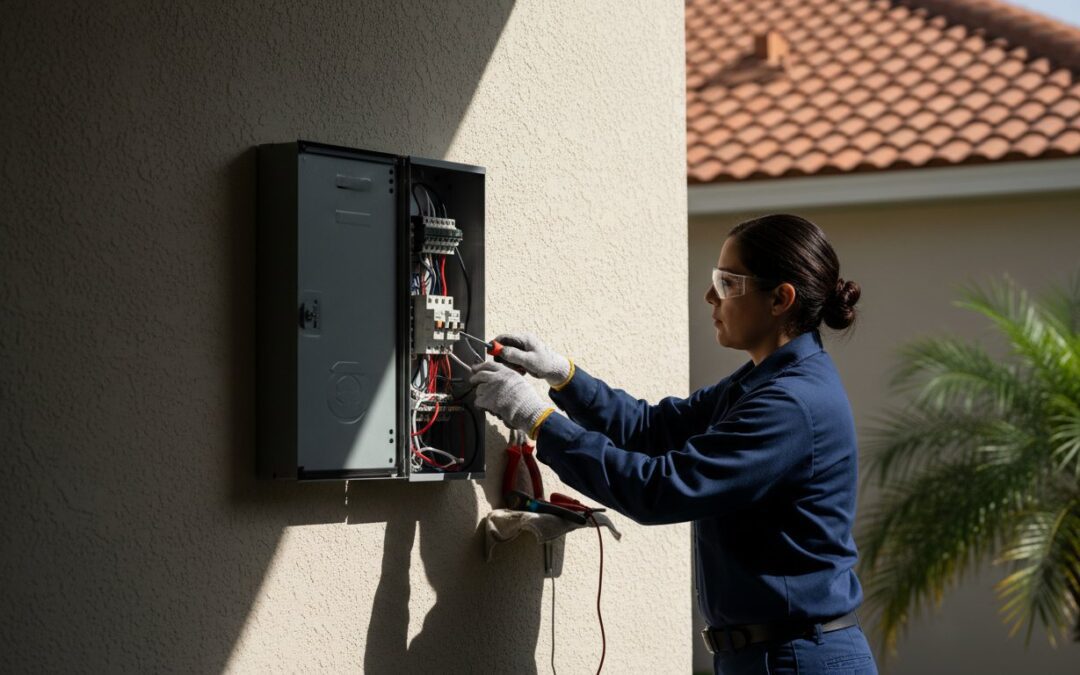
Attempting to swap your own electrical service panel isn’t just a difficult weekend project; it’s a gamble with your home’s safety and your financial legacy. While a few online tutorials might make the process look manageable, the DIY electrical panel upgrade risks are often invisible until it’s far too late. Since 1925, Sanford Electric Co. II, Inc. has seen how a single misplaced wire or an unpermitted installation can lead to devastating house fires or immediate insurance cancellations. We understand that rising home maintenance costs make the DIY route look attractive, but your family’s peace of mind is one area where cutting corners never pays off.
You deserve a home that’s secure, up to code, and fully protected. This guide reveals the critical safety, legal, and financial hazards of bypassing professional expertise for your electrical needs. We will examine the strict requirements of the 8th Edition of the Florida Building Code and explain why a standard 200-amp upgrade requires a licensed technician to ensure your property stays safe and insurable in Central Florida.
Key Takeaways
- Understand why your home’s electrical panel is a complex infrastructure piece that shouldn’t be treated like a simple light switch replacement.
- Identify the specific DIY electrical panel upgrade risks that lead to life-threatening arc flashes or hidden fire hazards like double-tapped breakers.
- Navigate the legal landscape of Central Florida building codes to ensure your home remains compliant and avoids costly permit violations.
- Protect your financial investment by understanding how unpermitted work can result in insurance policy cancellations and failed 4-point inspections.
- See why trusting a local institution with a legacy dating back to 1925 ensures your project meets the highest standards of quality and safety.
Why DIY Electrical Panel Upgrades Are More Than Just a “Weekend Project”
Many homeowners feel confident after successfully installing a smart doorbell or swapping a ceiling fan. However, an electrical panel is the central nervous system of your home’s infrastructure. It is the core distribution board that manages every watt of power entering your property. Treating a panel swap like a simple weekend project ignores the fundamental DIY electrical panel upgrade risks that can lead to catastrophic failure. Since 1925, Sanford Electric Co. II, Inc. has helped Central Florida residents understand that while minor repairs are manageable, the service panel is a high-stakes environment where errors have permanent consequences.
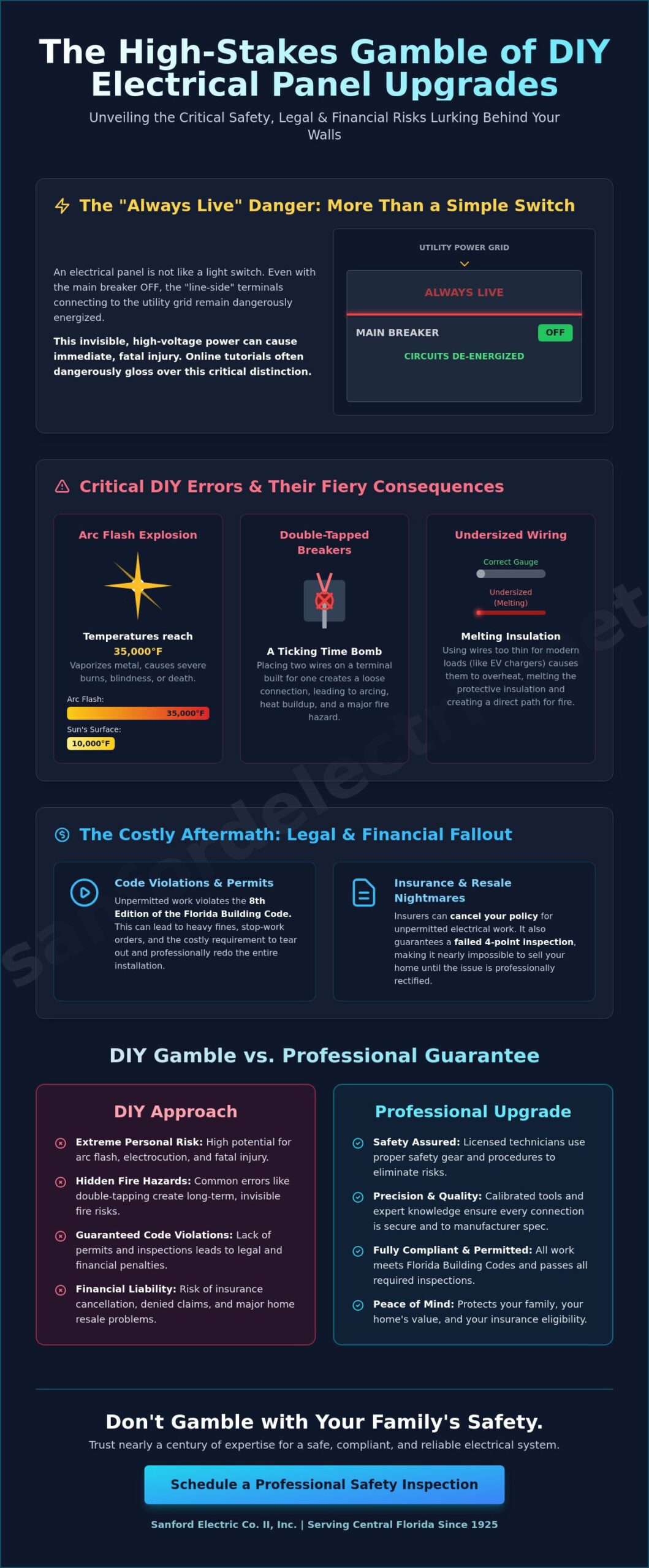
Replacing a light switch involves working with a single, de-energized circuit. Upgrading a panel involves managing the entire flow of electricity into your home. This distinction is vital because the “line-side” of your panel remains energized even when you turn the main breaker off. These live terminals connect directly to the utility grid with enough power to cause immediate, fatal injury. “YouTube University” tutorials often gloss over these life-or-death details. They assume every home’s wiring follows a perfect, textbook scenario, which is rarely the case in older Florida homes.
The Scope of a Main Service Panel Upgrade
A panel upgrade is a total system overhaul rather than a simple box replacement. It requires seamless integration with the utility meter and external service lines. Our technicians ensure the new equipment matches the specific demands of modern electrical loads, such as EV chargers and high-efficiency HVAC systems. This process involves precise bus bar alignment and secure connections that prevent resistance and heat buildup. If these components aren’t seated perfectly, the resulting friction creates a fire hazard that can smolder behind your walls for weeks before igniting.
The “Invisible” Dangers of High-Voltage Systems
High-voltage systems operate with a level of energy that standard 120V household outlets cannot match. Mistakes made at the panel level don’t just affect one room; they impact every single device in your home. A loose neutral wire or a poorly bonded ground can destroy expensive appliances and smart home systems in an instant. Understanding the DIY electrical panel upgrade risks means recognizing that you aren’t just risking a blown fuse; you are risking the structural integrity of your property. We use specialized, calibrated tools to ensure every connection is torqued to exact manufacturer specifications. This level of precision is what provides the peace of mind our family-owned business has delivered for nearly a century.
The Technical Dangers: From Arc Flashes to “Double Tapping”
Understanding the DIY electrical panel upgrade risks starts with respecting the sheer power contained within a service box. Many homeowners focus on the layout of the breakers but overlook the invisible forces at play. One of the most significant technical hazards is the arc flash. This event occurs when a short circuit happens through the air, often triggered by a dropped tool or a loose connection. The Electrical Safety Foundation International provides extensive resources on Do-It-Yourself (DIY) Electrical Safety, highlighting how these incidents can lead to severe burns, blindness, or death. Since 1925, our team has treated these high-voltage environments with the caution they demand.
Another common error is “double tapping.” This happens when a DIYer places two wires under a single breaker terminal designed for only one. It creates a fire-starting shortcut because the connection is rarely secure; this leads to arcing and localized heat. Similarly, using undersized wiring for modern high-amperage loads, such as a Level 2 EV charger, will cause the insulation to melt over time. If you’re unsure about the current state of your system, a professional electrical safety inspection can identify these hidden hazards before they escalate into a house fire.
The Physics of an Arc Flash Incident
An arc flash is essentially a lightning strike occurring inches from your face. Within milliseconds, temperatures can reach up to 35,000°F. This is three times hotter than the surface of the sun. At these levels, metal components vaporize and the air expands with explosive force. Standard household safety gear like gloves or goggles provides zero protection against this level of energy release. This is why our technicians use specialized personal protective equipment and follow strict safety protocols honed over a century of service in Central Florida.
Improper grounding and bonding represent another layer of risk. If a panel isn’t bonded correctly, a fault can electrify your home’s metal water pipes or gas lines. This turns your entire plumbing system into a live conductor. Additionally, choosing the wrong breaker brand for a specific panel can lead to catastrophic failure. Even if a breaker “fits” in the slot, if it isn’t listed for that specific distribution board, it may fail to trip during an overload, leaving your home vulnerable.
Common Wiring Failures in DIY Upgrades
The compatibility between copper and aluminum wiring is a frequent point of failure in older homes. Using the wrong connectors can cause galvanic corrosion, which increases resistance and heat. Precision is also required for torque specifications on wire terminals. Thermal expansion is the process where wires expand and contract as they heat up and cool down; this physical change can eventually vibrate loose any connection that wasn’t torqued to manufacturer standards. Professional installation ensures every lug is tightened with a calibrated torque wrench to prevent these long-term DIY electrical panel upgrade risks.
Central Florida Building Codes and the Legal Fallout of Unpermitted Work
Florida’s electrical standards are among the most rigorous in the nation. This isn’t bureaucracy for its own sake; it’s a response to our unique climate, high humidity, and weather extremes. The 8th Edition of the Florida Building Code, which took effect on December 31, 2023, sets high benchmarks for residential safety. Navigating the DIY electrical panel upgrade risks includes understanding that local municipalities don’t view this as a minor home improvement. If you attempt a panel swap without a permit in cities like Sanford, Orlando, or Lake Mary, you face immediate legal consequences. Code enforcement officers have the authority to issue stop-work orders, and homeowners can face significant Violations and Penalties. Under Florida Statutes, repeat violations can result in fines of up to $500 per day.
A licensed electrician does more than just wire the box; they manage the complex relationship between the homeowner, the city, and the utility provider. Most major utilities in Central Florida will not reconnect power to a home where a panel was installed without a verified municipal inspection. This means a DIY mistake could leave your family without electricity for days or weeks until a licensed professional can rectify the work and pull the proper permits. Even with the upcoming changes to Florida law under HB 803, effective July 1, 2026, electrical work remains strictly regulated. While some small projects under $7,500 may see permit exemptions starting in 2026, electrical panel work is explicitly excluded from this relief and still requires a permit regardless of cost.
Navigating Local Permits in Central Florida
Cities such as Oviedo and Winter Park have specific documentation requirements that the average homeowner cannot easily provide. This includes detailed load calculations and circuit maps that must be approved by the Authority Having Jurisdiction (AHJ). The AHJ serves as the final arbiter of safety for your neighborhood. Their role is to ensure that your new panel won’t overtax the local grid or create a fire hazard for adjacent properties. Attempting to bypass this process puts your entire community at risk and creates a permanent legal cloud over your property title.
The National Electrical Code (NEC) 2026 Standards
The National Electrical Code (NEC) is updated frequently to address new technologies and safety data. Current standards emphasize the need for advanced Arc-Fault Circuit Interrupter (AFCI) and Ground-Fault Circuit Interrupter (GFCI) protection across more areas of the home. DIYers often rely on outdated manuals or older video tutorials that don’t reflect the 2023 or 2026 code requirements. Using obsolete methods is one of the primary DIY electrical panel upgrade risks that leads to failed inspections. We perform a comprehensive Electrical Safety Inspection Orlando residents have trusted for generations to ensure every component meets modern legal requirements. This professional verification is the only way to guarantee your home remains safe and legally compliant.
The Financial Reality: Insurance Denials and Resale Obstacles
Saving money on home maintenance is a priority for many Central Florida families. However, the financial DIY electrical panel upgrade risks often outweigh any initial savings on labor. While you might save a few hundred dollars today, you could be setting yourself up for a massive financial loss tomorrow. Sanford Electric Co. II, Inc. has seen how uncertified electrical work can devalue a property instantly. Since 1925, our mission has been to provide stable, professional solutions that protect both your home and your wallet.
Fixing a botched DIY job often costs triple the price of an original professional install. This happens because a licensed electrician must first undo the incorrect wiring, pay for new permits, and then perform the installation correctly from scratch. It is far more efficient to invest in quality service from the start. Avoid these financial pitfalls by scheduling a professional electrical panel upgrade with a team that has served the community for nearly a century.
Why Florida Insurers Reject DIY Electrical Work
Florida’s homeowners insurance market is currently experiencing extreme volatility. Carriers are looking for every possible reason to mitigate their risk. Most insurers now require a “4-point inspection” for homes older than 30 years. This inspection specifically scrutinizes the roof, plumbing, HVAC, and electrical systems. If an inspector finds a new panel without a recorded municipal permit, the insurer will likely issue a non-renewal notice. They view unpermitted work as an unacceptable fire hazard. If a fire does occur and investigators trace the cause to uncertified DIY work, your claim will likely be denied. This leaves you entirely responsible for the total cost of rebuilding your home.
Resale Complications and the Inspection Process
Selling your home becomes significantly harder with a DIY panel. Florida law requires sellers to disclose known defects or unpermitted improvements to potential buyers. A professional home inspector will easily identify non-professional work during the escrow period. They look for missing circuit labels, improper wire routing, or mismatched breaker brands that don’t meet manufacturer specifications. Once these issues are flagged, a buyer’s lender may refuse to fund the loan until the work is corrected by a licensed professional. This can kill a real estate deal at the last minute or force you to drop your asking price significantly to cover the buyer’s future repair costs. Professional documentation from a trusted local anchor like Sanford Electric Co. II, Inc. provides the paper trail needed to satisfy lenders and buyers alike.
Why Professional Upgrades Provide Peace of Mind Since 1925
Choosing a professional for your home’s electrical needs is about more than just avoiding the immediate DIY electrical panel upgrade risks. It is about establishing a relationship with a partner who understands the long-term health of your property’s infrastructure. While the previous sections of this guide highlighted the physical and legal dangers of uncertified work, the solution lies in the reliability of a seasoned expert. Sanford Electric Co. II, Inc. provides a level of stability that only a century of local experience can offer. We don’t just install hardware; we deliver a permanent sense of security for your family.
Professional work is a direct investment in your home’s resale value and structural safety. When our technicians handle a panel upgrade, they provide a comprehensive warranty and safety guarantees that no DIY project can match. This professional documentation serves as a shield during insurance audits and home inspections. It proves that your electrical system was handled with the deliberate care it requires, ensuring your property remains a safe haven rather than a liability.
A Century of Electrical Expertise in Central Florida
Our company has been a staple of the community since 1925. Over the last century, we have evolved alongside the National Electrical Code, adapting to every technological shift from the first residential power grids to modern smart homes. This longevity is not just a number; it is a quantifiable asset for our clients. As a “Trusted Local Anchor,” we have seen and solved every possible electrical issue in the Central Florida area. Hiring a family-owned business means you are working with neighbors who stand by their results for generations. We take personal accountability for every wire we pull and every breaker we seat.
Comprehensive Solutions Beyond the Panel
Modern homes demand more from their electrical systems than ever before. A professional upgrade is the ideal time to look at the bigger picture of your home’s energy needs. Our experts ensure your new distribution board is fully prepared for EV charger installation Orlando homeowners are increasingly requesting. We also specialize in the integration of whole home surge protection during the upgrade process. This added layer of defense protects your expensive appliances and smart devices from Florida’s frequent lightning strikes and power fluctuations.
Don’t leave your home’s safety to chance or a tutorial. The DIY electrical panel upgrade risks are simply never worth the danger to your life or your financial future. Trust the experience that has powered Central Florida for nearly 100 years. Schedule your professional panel upgrade with Sanford Electric today and experience the peace of mind that comes with quality service since 1925.
Secure Your Home’s Future Today
Understanding the DIY electrical panel upgrade risks is the first step toward maintaining a safe and stable household. As established, bypassing professional help leads to physical dangers like arc flashes, legal headaches with local building departments, and the very real threat of insurance policy cancellations. Your electrical system is too critical to be left to chance or unverified online tutorials. It requires a steady hand and a deep knowledge of Central Florida’s specific regulatory environment to ensure long-term stability.
Sanford Electric Co. II, Inc. offers the reliability of a family-owned and operated business that has served the community for four generations. Our licensed and insured experts bring technical proficiency to every project, ensuring your home meets the highest standards of safety and efficiency. Protect your home and family with a professional panel upgrade from Sanford Electric. We look forward to providing you with the same quality service since 1925 that has made us a trusted local anchor for nearly a century. You can rest easy knowing your home is in expert hands.
Frequently Asked Questions
Is it illegal to upgrade my own electrical panel in Florida?
Yes, in most practical scenarios within Central Florida, it is illegal for a homeowner to perform a main service panel upgrade. Florida Building Code requires a permit for this work, and most municipalities, including the City of Orlando, require a licensed electrical contractor to pull those permits. Bypassing these regulations violates state statutes and can result in significant municipal fines.
Will a DIY electrical panel upgrade void my homeowners insurance?
It is highly likely that unpermitted work will void your coverage or lead to a denied claim. Insurance carriers in Florida are increasingly strict; they often refuse to pay for fire damage if the cause is traced back to a panel that wasn’t installed by a professional. One of the major DIY electrical panel upgrade risks is the permanent loss of your home’s insurability.
What are the signs that my current electrical panel is dangerous?
Burning smells, buzzing sounds, and scorch marks on breakers are immediate signs of danger. You should also watch for flickering lights when large appliances turn on or breakers that trip several times a month. If your panel shows signs of rust or corrosion, the internal components are likely compromised and require a professional inspection to ensure your home remains safe.
How long does a professional electrical panel upgrade usually take?
A professional upgrade typically takes between 8 and 12 hours to complete. This timeline includes the physical installation of the new distribution board, the necessary coordination with your utility provider for power disconnection, and final safety testing. Our team has refined this process since 1925 to ensure your home’s power is restored as efficiently and safely as possible.
Can I pull my own permit for electrical work as a homeowner?
While Florida law allows some “owner-builder” permits for minor tasks, main service panel upgrades are generally excluded. Because this project involves the utility grid and high-voltage line-side power, local building departments require a licensed electrician to handle the permitting. This ensures the work is performed to current National Electrical Code standards and verified by a municipal inspector.
What happens if I try to sell a house with unpermitted electrical work?
Unpermitted work will likely stall or kill your real estate deal during the home inspection phase. Professional inspectors easily identify non-compliant panel work, and buyers’ lenders often refuse to fund a mortgage until the issue is corrected. You may be forced to pay a licensed professional to redo the entire project and pay double permit fees as a penalty.
What is the most dangerous mistake people make during DIY panel work?
The most fatal mistake is assuming the entire panel is de-energized once the main breaker is turned off. The “line-side” lugs remain live with high-voltage electricity directly from the utility grid. Accidental contact with these terminals is a primary cause of arc flash incidents, which can lead to severe burns or death for those without specialized safety training.
Why do I need a 4-point inspection for my electrical panel in Central Florida?
Insurance companies use 4-point inspections to evaluate the risk of insuring older homes in our region. They specifically check the electrical panel for outdated brands, unpermitted upgrades, or hazardous wiring methods like double-tapping. Since we are a family-owned business with nearly a century of experience, we understand exactly what inspectors look for to keep your home compliant and covered.