
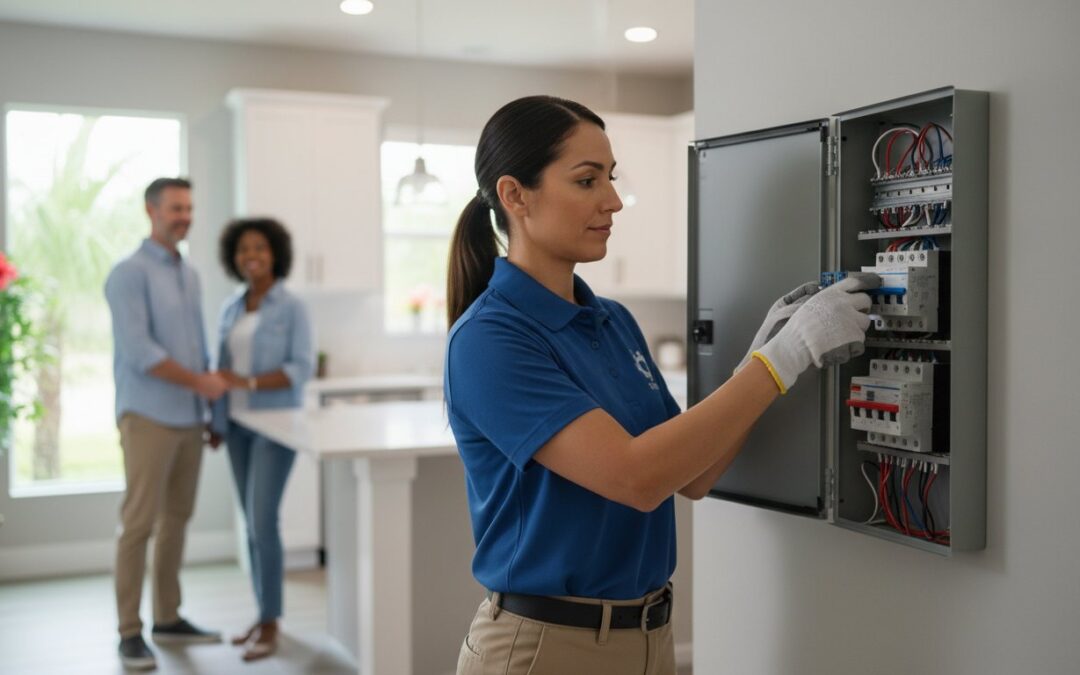
Your home’s electrical panel is no longer just a box of switches; in 2026, it becomes the primary firewarden for your entire modern lifestyle. As Florida prepares to adopt the 9th Edition of the Florida Building Code, many homeowners feel overwhelmed by technical updates and the AFCI breaker requirements Florida 2026 will demand. We understand that keeping up with shifting regulations feels like a moving target, particularly when your family’s safety and your insurance standing are on the line. Since 1925, Sanford Electric, LLC has helped Central Florida residents navigate these changes with professional clarity and dependable service.
This guide explains the essential electrical code changes homeowners must follow to meet the latest standards based on the 2023 NEC. You’ll learn why the proposal to remove kitchen AFCI mandates was denied by the Electrical Technical Advisory Committee and how these components, which typically cost between $50 and $350, prevent electrical fires. We provide a clear roadmap for your next panel upgrade, ensuring you avoid failed inspections and gain the peace of mind that comes from a safe, code-compliant home.
Key Takeaways
- Learn how the adoption of the 2023 NEC updates the AFCI breaker requirements Florida 2026 for all residential properties.
- Distinguish between AFCI fire protection and GFCI shock prevention to ensure your kitchen and laundry areas meet dual-protection standards.
- Understand the “6-foot rule” and how minor home renovations can trigger mandatory electrical code upgrades for existing wiring.
- Identify the specific areas in your home where arc-fault protection is now required to prevent electrical fires and pass inspections.
- Discover how a professional safety inspection from a trusted local expert can protect your family and simplify the compliance process.
What are AFCI Breaker Requirements in Florida for 2026?
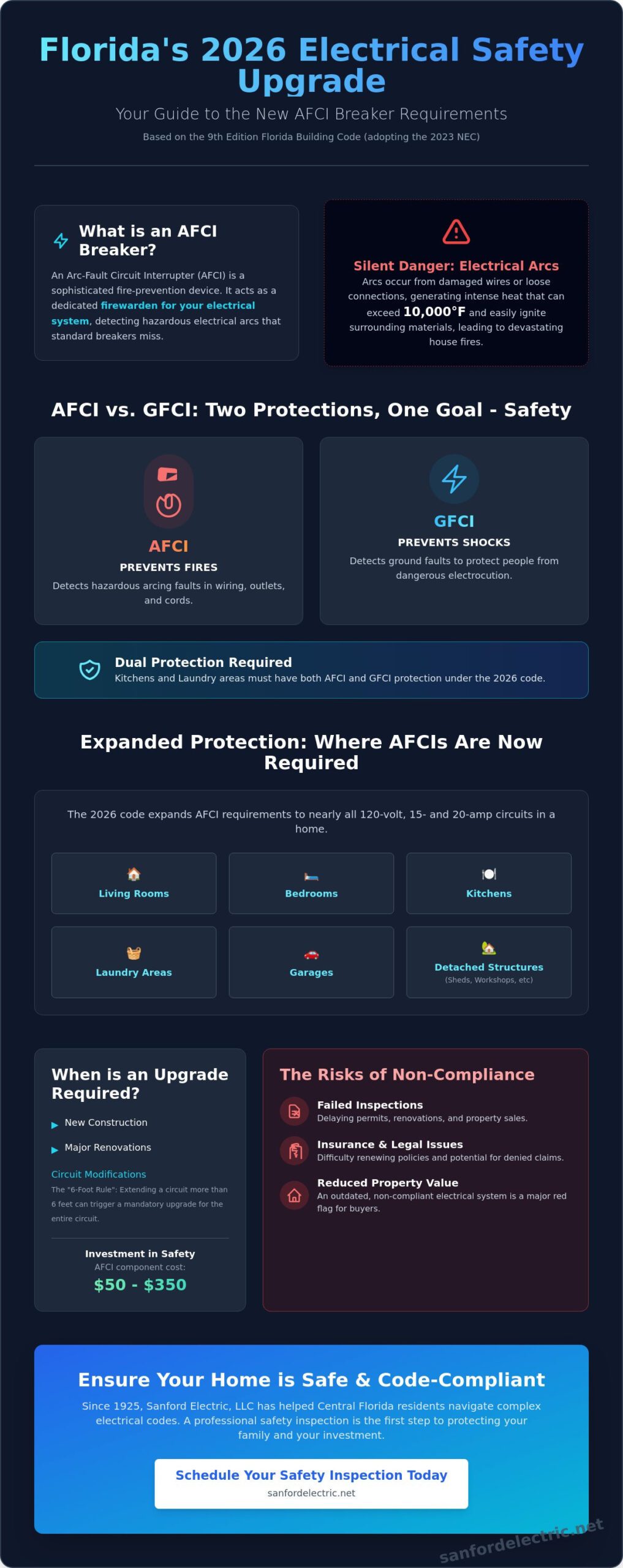
The transition to the 9th Edition of the Florida Building Code marks a significant milestone in residential safety. While previous codes focused primarily on bedrooms and living areas, the AFCI breaker requirements Florida 2026 will demand a more comprehensive shield for your entire property. An Arc-Fault Circuit Interrupter (AFCI) is not a standard breaker; it is a sophisticated fire-prevention device designed to recognize the specific signature of an electrical arc. These arcs are often the silent precursors to structure fires that standard thermal-magnetic breakers simply cannot detect.
By adopting the 2023 National Electrical Code (NEC) into the 2026 Florida update, state officials have prioritized the prevention of electrical fires before they start. This update is particularly impactful for Central Florida homeowners with detached structures. In the past, garages and accessory buildings were often overlooked or exempted from these requirements. The 2026 standards change this perspective, treating these spaces as high-risk zones where power tools, charging stations, and storage items increase the likelihood of electrical faults. At Sanford Electric, LLC, we’ve seen how these advancements in technology provide a tangible layer of stability for our neighbors.
How AFCI Breakers Protect Your Central Florida Home
Electrical arcing occurs when current flows through an unintended path, such as through cracked wire insulation or a loose terminal screw. These faults generate intense heat that can exceed 10,000 degrees Fahrenheit, easily igniting nearby wood or insulation. Standard breakers protect against overloads and short circuits, but they don’t trip during a low-level arc. AFCIs use advanced electronics to monitor the circuit constantly for these hazardous patterns. According to the 2026 standards, the AFCI serves as a dedicated fire-prevention monitor that immediately disconnects power the moment a dangerous arc is recognized.
The Legal and Insurance Impact of 2026 Compliance
Compliance is no longer just a recommendation; it’s a requirement for modern insurance renewals and property sales. Florida insurance providers are increasingly scrutinizing electrical systems, often mandating AFCI protection before a policy can be issued or renewed. Local building departments in Sanford, Orlando, and Lake Mary have also aligned their inspection checklists with these new 2026 standards. If your home lacks these safety components, you may face difficulties with permit approvals or insurance claims. Since 1925, our family-owned business has helped residents maintain their property value through professional upgrades. To ensure your system is ready for these changes, consider a comprehensive electrical safety inspection orlando to identify any gaps in your protection.
Key Changes in the 2026 NEC for Florida Residential Properties
The transition to the 2026 code cycle brings a higher standard for residential electrical systems across the state. Central Florida homeowners will see the AFCI breaker requirements Florida 2026 expand to cover almost every 120-volt, 15- and 20-ampere branch circuit in the home. This move follows data from the Electrical Safety Foundation International showing that arc-fault technology is a leading defense against home fires. One of the most significant shifts involves NEC 210.12(B), which now removes the previous 2025 expiration date for certain exceptions, making them permanent fixtures of the code rather than temporary measures.
Detached structures are no longer exempt from these rigorous safety protocols. If you’ve built a pool house or a detached workshop in Sanford or Lake Mary, these areas must now comply with the same arc-fault standards as your primary residence. This change reflects the reality of modern Florida living, where accessory buildings often house expensive electronics, home offices, or hobby equipment that increases the electrical load on the property. Since 1925, Sanford Electric, LLC has helped neighbors navigate these technical updates to ensure their properties remain safe and insurable.
New Rules for Garages and Accessory Buildings
The 2026 update specifically targets garages and what the code defines as “accessory buildings.” In Central Florida, this includes everything from a basic garden shed with a single light to a fully finished “she-shed” or detached home office. Under the new code, any 120-volt circuit serving these spaces must have AFCI protection. Our technicians have seen many older Sanford homes where garage wiring is the most vulnerable point of the system; these new requirements address that risk head-on. If you’re unsure if your detached structures meet these standards, a professional electrical safety inspection can provide the clarity you need to stay compliant.
The 2026 Welding Equipment Exception Explained
For Florida hobbyists who enjoy metalworking or automotive restoration, the 2026 code provides a necessary relief through a permanent exception. There is now a permanent exception for individual branch circuits that supply outlets for arc welding equipment in garages and accessory buildings. This exception exists because the high-frequency signals generated by welders often cause nuisance tripping in standard AFCI breakers. To stay compliant, you must ensure the circuit is dedicated solely to the welder and is clearly labeled in your electrical panel. We’ve helped homeowners balance these technical exceptions with overall property safety for nearly a century, ensuring your shop remains functional without compromising on fire protection.
AFCI vs. GFCI: Understanding Dual Protection Standards
Understanding the distinction between protection types is a common point of confusion for many homeowners. While both devices look similar in your electrical panel, they serve entirely different safety roles. A Ground Fault Circuit Interrupter (GFCI) is designed to prevent lethal electric shocks by detecting when current leaks to the ground. In contrast, an Arc-Fault Circuit Interrupter (AFCI) focuses on fire prevention by identifying dangerous electrical arcs before they ignite surrounding materials. Meeting the AFCI breaker requirements Florida 2026 often means integrating both levels of protection into a single circuit.
According to AFCI Safety guidelines, these devices use advanced electronics to distinguish between normal operation and hazardous conditions. For the 2026 code cycle, dual-function breakers have emerged as the most efficient solution for homeowners. These units combine AFCI and GFCI technology into one breaker, saving space in your panel while ensuring full compliance with the 2023 NEC standards adopted by Florida. You can identify these in your panel by looking for the “Test” button; they’re often color-coded differently than standard breakers, though colors vary by manufacturer.
Where Florida Homeowners Need Both
In the humid climate of Central Florida, moisture-prone areas have long required GFCI protection. However, the 2026 standards mandate that these “high-risk” zones also include arc-fault protection. Safety is our priority. You must have dual protection in the following areas:
- Kitchens (all 120-volt, 15- and 20-amp circuits)
- Laundry rooms and surrounding outlets
- Wet bars and areas within 6 feet of a sink
- Dishwashers and dedicated appliance circuits
A common mistake we see is homeowners assuming a GFCI outlet at the wall provides AFCI protection. It doesn’t. AFCI protection must typically start at the breaker to protect the entire length of the branch circuit wiring.
Troubleshooting Nuisance Tripping in 2026
The most frequent objection we hear is that these breakers trip for no reason. This is often called “nuisance tripping.” It’s important to understand that 2026-era AFCI technology is significantly more sophisticated than the models released twenty years ago. Modern breakers are much better at ignoring the normal sparks created by vacuum motors or power tools. If a modern breaker trips, it’s usually identifying a real issue, such as a shared neutral or a loose connection. Since 1925, Sanford Electric Co. II, Inc. has focused on precise installations that eliminate these wiring faults. We serve Central Florida with the expertise needed to ensure your system is stable and dependable.
When Does Your Florida Home Require an AFCI Upgrade?
A common misconception among Central Florida residents is that electrical code updates only affect new construction. In reality, the AFCI breaker requirements Florida 2026 frequently apply to existing homes through what we call the “Renovation Trigger.” This occurs when a homeowner makes even minor modifications to their electrical system. If you’re planning to update your kitchen or add a home office in Winter Park, these rules will likely impact your project. Ensuring your home meets these standards isn’t just about passing a city inspection; it’s about maintaining the safety and value of your property in a competitive real estate market.
For many older homes, an electrical panel upgrade orlando is the most practical way to achieve compliance. Rather than piecemeal updates, a comprehensive panel modernization allows our technicians to install the necessary dual-function breakers for your entire home at once. This approach simplifies future renovations and provides immediate fire protection for your family. Since 1925, Sanford Electric Co. II, Inc. has guided homeowners through these transitions, focusing on long-term stability rather than quick fixes. We believe in doing the job right the first time to ensure your home remains a safe haven for decades to come.
Code Requirements for Home Renovations and Additions
The 2026 Florida Building Code is very specific about circuit extensions. If you extend a branch circuit by more than 6 feet or add a new outlet to an existing line, that entire circuit must be upgraded to include AFCI protection. This “6-foot rule” ensures that any significant new wiring meets modern safety expectations. Under the 2026 standards, any modified circuit that supplies outlets in a location where AFCI is required must be brought up to current code. This means a simple room addition can quickly become a catalyst for necessary safety improvements across your entire electrical system.
Upgrading Older Florida Homes (Pre-2000s)
Estates in historic areas like Sanford or Winter Park often feature wiring that predates modern fire-safety technology. If your home still uses older systems, integrating AFCI protection is a critical step in risk management. We often combine these updates with aluminum wiring remediation to provide a comprehensive safety solution for homes built between 1965 and 1973. Phasing in these upgrades allows you to manage costs while systematically improving your home’s fire resistance. Our team understands the unique challenges of older Central Florida architecture and provides dependable results that respect the history of your property.
Our family-owned and operated team is ready to help you evaluate your current system. If you’re planning a renovation, schedule a consultation with our professional technicians to ensure your project meets the 2026 standards from day one.
Ensuring 2026 Code Compliance with Sanford Electric Co II, Inc.
Since 1925, Sanford Electric Co. II, Inc. has served as a pillar of reliability for Central Florida families. As we approach the 2026 code cycle, our century of experience becomes your greatest asset in maintaining a safe, compliant home. We’ve seen every major shift in electrical standards over the last 100 years; we apply that historical perspective to every project we handle. Navigating the AFCI breaker requirements Florida 2026 involves more than a simple hardware swap. It requires a deep understanding of how modern circuitry interacts with your home’s existing infrastructure to ensure long-term stability.
Our family-owned and operated business prides itself on a disciplined, traditional approach to electrical work. We don’t rely on shortcuts or temporary fixes. Instead, we provide functional, direct solutions that prioritize the safety of your family and the integrity of your property. Whether you’re managing a historic estate in Sanford or a modern residence in Lake Mary, our technicians bring a level of professional precision that only comes from decades of local service. We’re here to provide the peace of mind that comes from knowing your home is protected by the region’s most trusted electrical experts.
Professional Panel Upgrades and AFCI Retrofitting
Our technicians begin every project with a comprehensive evaluation of your existing system to determine its 2026 compatibility. We look beyond the surface to identify potential wiring faults, shared neutrals, or aged insulation that could cause issues with new arc-fault technology. While some might suggest individual outlet swaps, we advocate for whole-home protection through a modernized electrical panel. This approach is more dependable and ensures every inch of your branch circuitry is monitored for fire-starting arcs. For homeowners seeking total power security, we also offer expert generator installation central florida to keep your safety systems running during our frequent tropical storms.
The Sanford Electric Guarantee: Safety Since 1925
We’ve built our reputation on “Quality Service Since 1925.” This isn’t just a tagline; it’s a commitment to high standards that has spanned four generations. When we handle your 2026 compliance project, we manage the entire permitting and inspection process with local Central Florida authorities. We speak the language of the building departments in Orlando, Sanford, and beyond, ensuring your upgrades pass inspection without unnecessary delays. Our goal is to make the transition to the 9th Edition of the Florida Building Code as seamless and stress-free as possible for you.
Don’t leave your home’s safety to chance or wait for a failed inspection to take action. Professional intervention is the only way to guarantee your wiring meets the rigorous demands of the 2023 NEC standards. Schedule your 2026 code compliance inspection with Sanford Electric today and let our seasoned experts secure your home for the next century of service.
Securing Your Central Florida Home for the 2026 Code Cycle
The 9th Edition of the Florida Building Code represents a major advancement in residential fire safety. You now understand how AFCI breaker requirements Florida 2026 impact everything from your detached garage to your kitchen circuits. These rules prioritize fire prevention through advanced arc-detection technology. Whether you’re planning a small renovation or a full panel modernization, staying ahead of these standards protects your property value and insurance eligibility.
Sanford Electric Co. II, Inc. has served this community since 1925. Our family-owned business relies on four generations of expertise to solve complex electrical challenges. We provide fully licensed and insured technicians who approach every project with professional care. We handle the permits and technical compliance so you don’t have to worry about the details. Quality service is our legacy.
Ensure your home meets 2026 Florida safety codes; Contact Sanford Electric Co II, Inc. today!
We look forward to keeping your home safe and stable for many years to come.
Frequently Asked Questions
Are AFCI breakers required in Florida for all rooms in 2026?
Yes, the 9th Edition of the Florida Building Code mandates AFCI protection for almost every living space in the home. This includes kitchens, family rooms, dining rooms, living rooms, bedrooms, hallways, and laundry areas. These AFCI breaker requirements Florida 2026 homeowners face are based on the 2023 NEC. Our technicians ensure your system meets these rigorous fire safety standards to protect your property and your family.
What is the difference between AFCI and GFCI protection under the 2026 code?
AFCI protection is designed to prevent fires, while GFCI protection is designed to prevent lethal shocks. AFCI technology monitors for dangerous electrical arcs caused by damaged wires or loose connections. GFCI technology detects when electricity is leaking to the ground, often through water. Under the 2026 standards, high-risk zones like kitchens and laundry rooms require both types of protection to ensure comprehensive safety.
Do I need to replace my entire electrical panel to meet 2026 AFCI requirements?
You don’t always need a full panel replacement, but it’s often the most efficient solution for compliance. If your existing panel is modern and has sufficient space, we can retro-fit it with the required breakers. However, panels installed before the year 2000 often lack the necessary hardware to support advanced AFCI technology. A professional inspection will determine if your current setup can handle the 2026 safety requirements.
What happens if my home does not meet the 2026 AFCI code during a renovation?
Failing to meet the code during a renovation will result in a failed electrical inspection from your local building department. Florida law requires compliance whenever you extend a circuit by more than 6 feet or add new outlets. This failure can stall your project and may lead to issues with your homeowner’s insurance policy. We help Sanford and Orlando residents avoid these legal hurdles by ensuring every modification is done right the first time.
Can I install AFCI breakers myself to save money?
We strongly recommend hiring a licensed professional for any breaker installation. Electrical work involves significant risks of fire and shock if not performed correctly. Most Florida municipalities require a permit for these upgrades to ensure they meet the AFCI breaker requirements Florida 2026 standards. Since 1925, we’ve provided the reliable service needed to ensure your home is safe and your work is fully documented for insurance and resale purposes.
Why do some appliances cause AFCI breakers to trip, and how do I fix it?
Nuisance tripping is often caused by older appliances with motors or electronics that create electrical “noise.” While this was common with older breakers, 2026-era AFCI technology is much more precise. If your breaker trips, our experts can determine if the appliance is faulty or if there’s a loose connection in your wiring. We use functional, direct diagnostic methods to solve these issues and restore your peace of mind.
Does the 2026 code require AFCI protection for outdoor circuits or garages?
The 2026 update expands AFCI requirements to include garages and accessory buildings like sheds or detached offices. Any 120-volt, 15- or 20-ampere branch circuit serving these areas must now have arc-fault protection. This is a shift from previous codes that focused primarily on interior living spaces. We help Central Florida homeowners upgrade their detached workshops and garages to meet these new, stricter safety standards.
How much do AFCI breakers cost compared to standard breakers in 2026?
AFCI breakers are more expensive than standard breakers because they contain advanced microprocessors. According to industry data, the cost typically ranges from $50 to $350 per breaker including materials and labor. While the initial investment is higher, the fire-prevention benefits are substantial. There have been no reported electrical fires in Florida residential kitchens protected by AFCI technology, making it a dependable investment in your home’s safety.